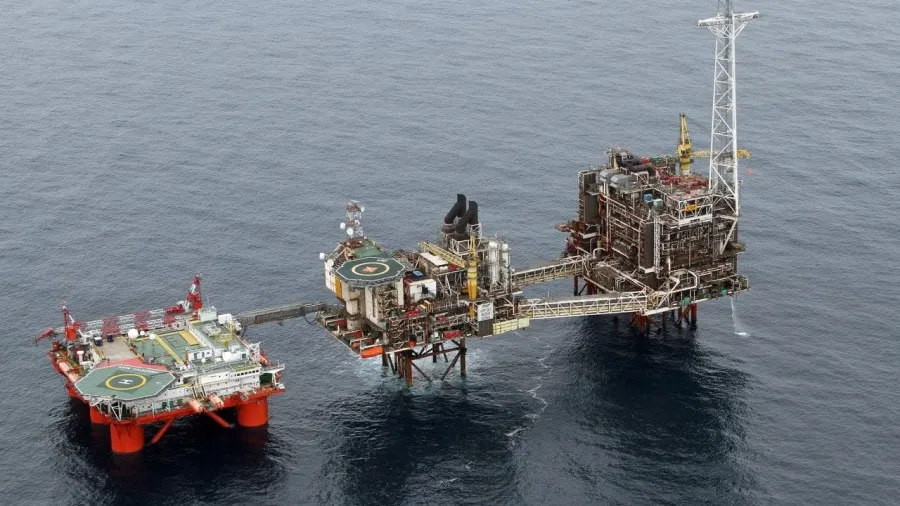
Back in July, UK oil and gas major BP Plc. announced that it was putting its entire UK North Sea oil and gas business up for sale as part of a broader $20-billion portfolio overhaul, marking the end of a 60-year era as a leading player in Europe’s largest oil basin. BP’s North Sea operations produced about 117,000 barrels of oil equivalent per day in 2025 (roughly 5% of BP’s total global output) and employed around 1,100 people. BP is hardly alone.
Exxon Mobil and Chevron have sold their UK North Sea assets in recent years, while Shell Plc. and TotalEnergies have folded theirs into joint ventures as the basin depletes. North Sea production has dropped sharply over the past couple of decades, from ~4.5 million boepd at the turn of the millennium to roughly 1 million boepd currently.
Frequent policy shifts and regulatory uncertainty from the UK government have also played a big role in pushing the energy giants out. The UK North Sea tax regime imposes a headline rate of 78% on upstream oil and gas profits, made up of a 38% Energy Profits Levy (EPL), 30% Ring Fence Corporation Tax and a 10% Supplementary Charge. Investors are now closely tracking the planned switch from the EPL to the Oil and Gas Revenue Levy (OGRL).

Instead of taxing profits, the OGRL will charge 35% on the portion of upstream revenues above set price thresholds of $90 per barrel for oil and 90p per therm for gas, or about $12 per million British thermal units (Btu).
Below those levels, producers would pay only the 40% base rate (30% ring-fence corporation tax plus the 10% supplementary charge). The OGRL is due to replace the EPL when it expires in March 2030, and Offshore Energies UK is lobbying for it to start in January 2027 instead.
“When you share your news through GEN, you’re not just getting coverage – you’re getting endorsed by the energy sector’s most trusted voice.”