


Despite the UK’s best efforts, its energy system will require natural gas for decades to come
“To drill or not to drill” in the North Sea is set to become one of the first big decisions for the Burnham government. Inevitably it is portrayed as a binary choice. With the reality of climate change clearer than ever, the case against drilling is cast as a simple ethical decision driven by the need to move away from fossil fuels. The case for is the posited energy security and economic benefits, and the futility of constraining our own production.
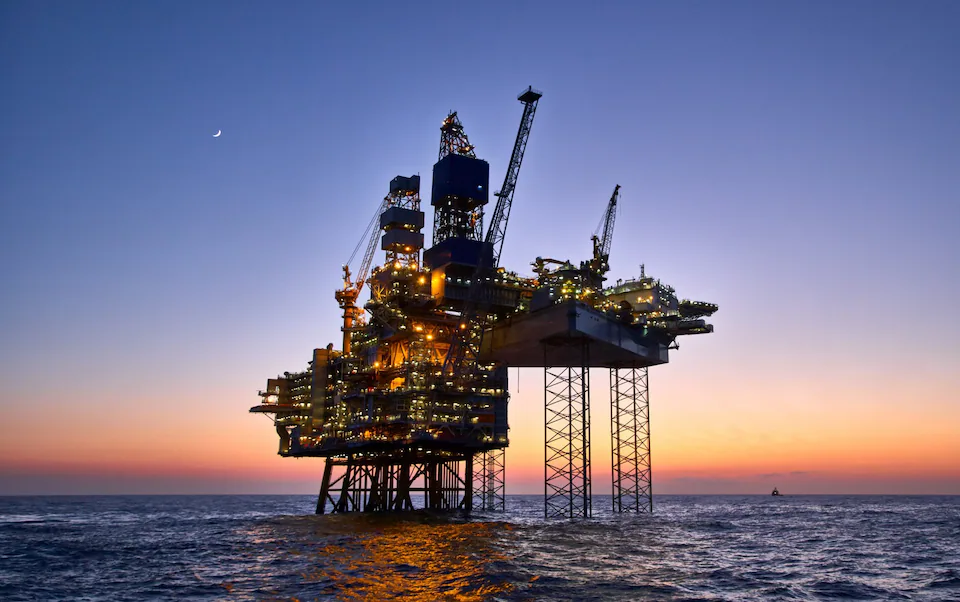
In fact, the two main fields in contention are very different, and a closer look could suggest yes to Jackdaw, a North Sea gasfield east of Aberdeen, and no to Rosebank, the oilfield north-west of the Shetland Islands.
In a geopolitically fractured world, durable energy and climate policy means finding ways to align national and global interests. The global campaign to “leave it in the ground” has had little traction when it is up against perceived national interest and the reality that most economies still depend heavily on fossil fuels.
Despite the UK’s best efforts, its energy system will require natural gas for decades to come, primarily to heat hard-to-electrify homes and to meet some peak generation needs.
Jackdaw’s gas would last about a decade, during which time the UK is projected to become rapidly more dependent on imports, particularly of liquefied natural gas. The field would connect to the UK gas network. Although it could not stop the rapid decline of North Sea production, there is a plausible case that it could contribute marginally to UK energy security.
The gas industry emits greenhouse gases in production and transport, as well as when the gas is used. Short pipelines mean lower emissions than from the UK’s LNG imports, which are mostly from the US. The gas Britain imports by pipeline from Norway has among the lowest climate impact of any gas, given Norway’s carbon tax and measures that make its industry reinject and store the CO₂ associated with production.


Shell, part of the joint venture that operates Jackdaw, estimates that the gas in the field contains about 4 per cent CO₂. The gas would mainly displace LNG imports, reducing the UK’s emissions footprint — especially if the UK adopts Norway-style policies to control production emissions.
Strategically, the government should also explore obligations to sequester the equivalent amount of CO₂ arising from using the gas. In short, the field could contribute a little to UK energy security and reduce emissions from UK energy consumption. Rosebank would do neither.
UK oil consumption is dominated by road transport. It is now clear we can phase that consumption out more easily and rapidly than gas. Electric vehicles are increasingly competitive, not just in China but in other countries without tariffs like Norway, Australia and some in south-east Asia. They also avoid the health problems of air pollution. Electrifying transport offers an enduring reduction in both emissions and exposure to the instability of oil markets.
Rosebank’s main output (about 90 per cent) would be oil, sold into the world’s volatile and currently substantially war-driven oil market. Most of its oil would have to be exported for refining, conferring no obvious benefits to either UK price or energy security. It would extend an industry and supply chain that has apparently abandoned all pretence of pursuing a future aligned with climate security. Reinforcing the UK’s zero-emission vehicle mandate and sorting out its EV charging infrastructure would be far more valuable and sustainable than Rosebank.
If we step back from the simple “develop or not” dichotomy, Jackdaw and Rosebank are poles apart. UK Prime Minister Andy Burnham has said he will pursue a “pragmatic approach”, which on an issue framed as a black-and-white is hard to do. In the UK, the Conservative Party not only supports drilling but has said it would repeal the Climate Change Act, abandoning credibility on the greatest global challenge of this century.
Basic science underlines the urgency of moving away from fossil fuels. After a summer of unprecedented heatwaves, wildfires and rising ocean temperatures, policy needs to force the fossil fuel industry’s head out of the sand by backing developments that reduce emissions and rejecting those that sustain them.
Within a strong national legal framework for decarbonisation, demonstrating the difference between acceptable and unacceptable fossil fuel developments could both solve a genuine dilemma and create a lasting legacy.
“When you share your news through GEN, you’re not just getting coverage – you’re getting endorsed by the energy sector’s most trusted voice.”