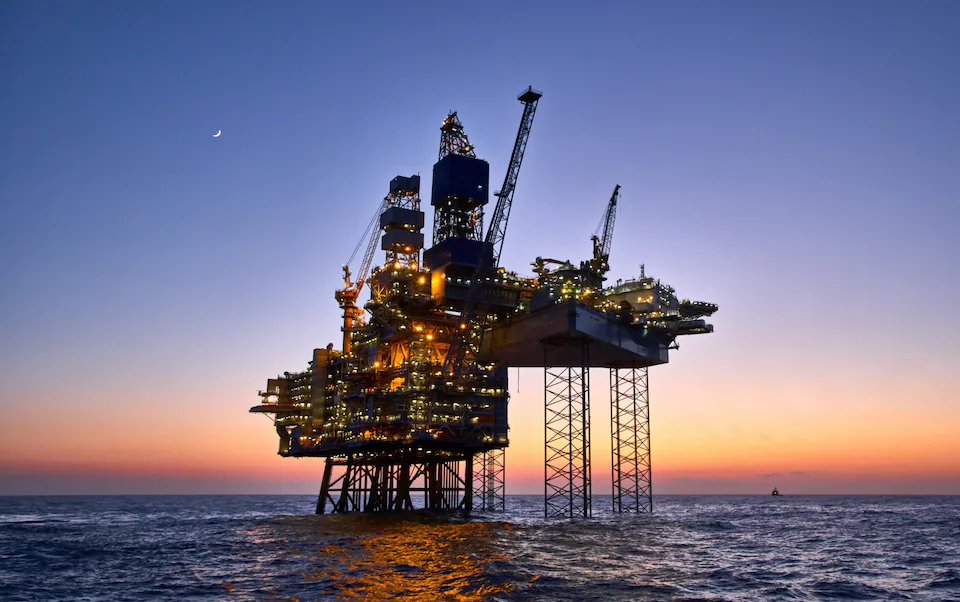
Vår Energi’s drilling operations with COSL Drilling Europe’s rig in the Norwegian sector of the North Sea have not yielded hydrocarbons.
Norwegian oil and gas player Vår Energi and its partners, Equinor, DNO Norge, and Petoro, have drilled a wildcat well on the Norwegian Continental Shelf (NCS), which ended up being dry.
The wildcat well 25/8-24 S, also known as the Jotun Deep prospect, was drilled in production license 1203, 20 kilometers northwest of the Ringhorne installation and 190 kilometers west of Stavanger, as the first well drilled in this license, which was awarded in March 2024 (APA 2023).
The licensees in production license 1203 are Vår Energi (operator), Equinor, DNO, and Petoro. This well was drilled by the COSL Pioneer rig. The well was drilled to a vertical depth of 3,417 meters below sea level and was terminated in what, so far, is presumed to be the Smith Bank Formation.
While the well’s primary exploration target was to prove petroleum in the Statfjord Formation in the Late Triassic to Early Jurassic, the secondary exploration target was to prove petroleum in the Skagerrak Formation in the Late Triassic, in addition to proving petroleum in underlying layers.

The well 25/8-24 S encountered a reservoir in the upper Statfjord Formation with a total thickness of 81 meters, 64 meters of which were sandstone with good reservoir quality. The reservoir was aquiferous. The lower Statfjord Formation was encountered with a total thickness of 53 meters, 23 meters of which were sandstone with good reservoir quality.
The reservoir was aquiferous. In the secondary exploration target, the well encountered the Skagerrak Formation with a total thickness of 161 meters. The formation contains two thicker sandstone layers with moderate reservoir properties, in addition to multiple thin sandstone layers with poor reservoir properties. The reservoir was aquiferous.
Under the Skagerrak Formation, the well encountered rocks with poor reservoir quality, most likely the Smith Bank Formation in the Early to Middle Triassic. According to the Norwegian Offshore Directorate, weak hydrocarbon indications in the potential Smith Bank Formation cannot be ruled out.
The well was not formation-tested, but extensive volumes of data were collected. The water depth at the site is 127 meters, and the well has been permanently plugged and abandoned.
“From our platform to LinkedIn’s energy professionals – your announcements reach the entire sector’s network, not just our readers.”