
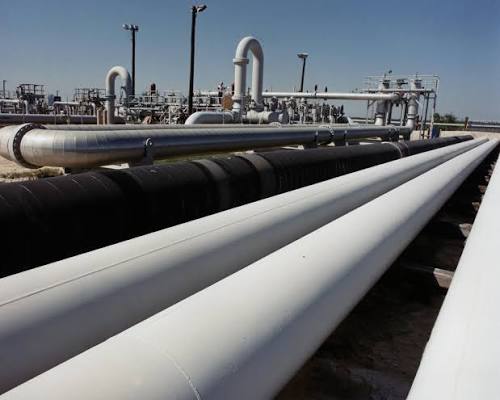
Access to oil and natural gas wells, critical mineral mines, secure maritime shipping routes and a diversified group of suppliers only represents the ‘first mile’ along the energy route. A significant and persisting challenge that policymakers in the West have to contend with appears in the so-called ‘middle mile’, comprised of processing and refining plants, transformers, energy storage systems and other heavy electrical infrastructure in the grid. It is here that some of the most consequential supply-chain vulnerabilities remain.
According to the International Energy Agency’s (IEA) assessment, mid- and downstream capacities still lag behind the expansion that mining projects experienced over the past few years. Energy resilience and—ultimately—security, however, continue to be measured by the end products supply chains can deliver. In the critical minerals field, for example, each stage of the value chain requires a different set of equipment, skills and investment. A country may therefore secure access to raw materials sourced from a variety of geographic locations, but it will remain constrained by bottlenecks in processing and manufacturing. Securing power transformers, for example, can take up to four years based on the IEA’s report.
Nouveau Monde Graphite’s (NMG) recent projects illustrate how gaps can persist between separate stages of development along a value chain, even under the direction of the same firm. The Matawinie Mine, NMG’s flagship natural flake graphite mining project in Quebec, Canada started construction in May this year, with an estimated 31-month timeline for completion. The mine is expected to produce over 100,000 tons of graphite annually, but its complementary project, a battery-material plant in Bécancour that is supposed to refine raw materials has not yet received the green light from investors.
Therein lies the challenge of building resilience. A resource-mining project is only one stage of a functioning graphite processing supply chain aiming to produce batteries as the end product.
Korea Zinc’s recent leadership dispute with its largest shareholder, the Young Poong Group, highlights a different challenge in the construction of integrated supply chains. In December 2025, directors affiliated with Young Poong and private equity firm MBK Partners voted against all five board agenda items related to the construction of a jointly planned critical minerals refinery in Tennessee, including a proposed third-party share issuance to finance the project. Young Poong and MBK subsequently sought an injunction to block the issuance in an attempt to hinder the project’s progress. A South Korean court eventually rejected the motion later that month, allowing the project to move forward.
The planned refinery in Tennessee, named Project Crucible, showcases the scale of the effort that is required to create new processing capacity. The project, which has been portrayed by President Trump as integral to American critical mineral supply chain resilience, envisages a $7.4 billion investment, supported by $210 million of direct funding made available through the CHIPS Act by the U.S. Department of Commerce. The refinery is intended to produce 13 critical and strategic minerals, including zinc and copper, and would have a capacity of 540,000 tons per year. The plant, which was initially opposed by MBK Partners and Young Poong on the grounds that American control would pose a national security risk to Korean strategic interests, would supply the manufacturing of electronic components, semiconductors and defense products alike.
The Korea Zinc case exhibits how the execution of a major industrial project can be impacted in an internal corporate dispute. It also shows how foreign governments could exert control over strategic infrastructure with the help of third party, sometime private sector, entities. In this regard, MBK Partners’ long history of investment in China and the China Investment Corporation’s stake in MBK’s Fund VI deserve further scrutiny. The wider lesson is that alternative supply chains, especially those seeking independence from China, must understand the institutional factors that can potentially negatively impact the execution of new strategic projects.
Capacity shortages or supply chain disruptions can similarly delay or altogether impede the reliable delivery of energy products, whether in the most basic form of electricity or the transmission and storage systems that the grid relies on. The severe global shortage of high-voltage transformers is an ongoing challenge that is heavily impacting utility companies and new infrastructure development projects in the U.S. The EU’s historical reliance on Russian natural gas transported via fixed pipelines is a more straightforward example. In critical minerals, China’s dominant control over 90% of the processing of rare earth elements (REEs) continues to give it significant leverage over Western industries relying on these processes.
Energy security, therefore, cannot be assessed solely on the basis of resource availability or supplier diversity. It must also account for the industrial capacity and infrastructure that are readily available to turn resources into reliable energy supplies. Addressing the ‘middle-mile’ problem requires sustained investment in processing and manufacturing capacities alongside stronger cooperation with trusted partners, coordination across different stages of supply chains, and closer scrutiny of the ownership and financing structures behind strategically important assets.
As critical dependencies and points of geopolitical leverage already exist, Western policymakers’ objective should prioritize resilience over complete self-sufficiency, while ensuring that supply chain disruptions or governance disputes do not undermine the security of the critical infrastructure systems.
“Join the companies that smart energy professionals follow – because when you’re featured on GEN, the industry pays attention.”