Saudi Arabia has reportedly begun shutting down some of its oil fields and reducing oil production in response to the crisis plaguing the Strait of Hormuz, where activity is largely disrupted amid US-Israeli aggression on Iran.
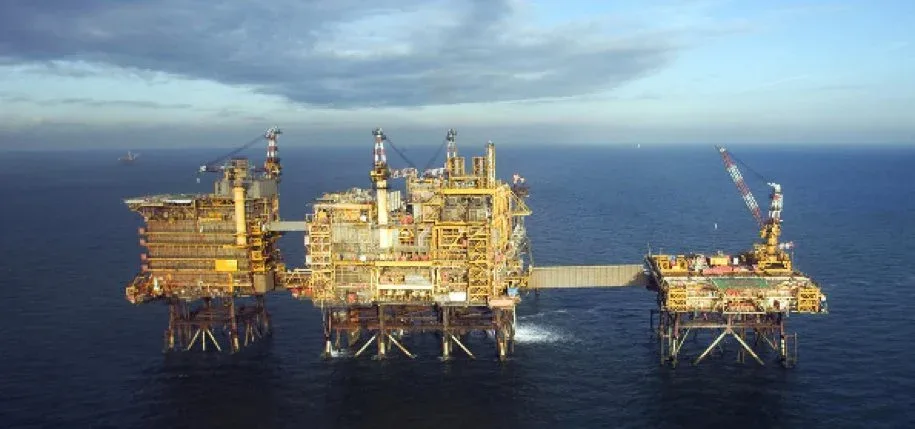
Saudi Aramco has now closed the Marjan, Abu Safa, Safaniya, and Zuluf oil fields, curtailing an estimated 2-2.5 million barrels per day, according to The Wall Street Journal.
It follows Iranian attacks on shipping in the Strait of Hormuz, and repeated warnings by Tehran to vessels in the area against using the waterway, where around a fifth of the world’s oil exports travels through.
Saudi Arabia is one of the world’s leading oil producers, pumping out around 10 million barrels and exporting around 7 million barrels a day. The Safaniya oil field is the largest offshore field in the world, located north of Aramco’s company headquarters in Dhahran, on the Saudi coast of the Persian Gulf.
Activity at other oil fields has also significantly reduced, The Wall Street Journal reported.
Riyadh is also diverting its crude oil exports via alternative routes, particularly the Red Sea, to prevent its exports from being caught up in the Hormuz storm, although the route to Yanbu on the Red Sea coast only has the capacity for five million barrels a day.
The crisis started as a result of the joint US-Israeli war on Iran, launched on 28 February, which has killed at least 1,255 Iranians.
Tehran retaliated by firing missiles at US interests in the Arabian Peninsula, before extending its attacks to ships in the Strait of Hormuz and civilian infrastructure in Gulf states.
The crisis has forced tanker traffic to drop dramatically or to be completely suspended, plunging supply chains into chaos. Global oil production has been reduced to about 20 percent, with natural gas and oil prices skyrocketing in Europe, East Asia, and North America, and other markets.
As of 8 March, crude oil prices surpassed $100 per barrel for the first time in four years, since the 2022 Russian invasion of Ukraine.
Other major oil producers have also reduced production, including the UAE, Iraq, and Kuwait, as the region continues to grapple with the crisis.
The UAE announced on Tuesday that it had closed its biggest oil refinery after a drone attack.
Reduction of oil production ‘catastrophe’ as Trump threatens
In light of the Saudi decision to reduce oil production, Saudi Aramco warned that there would be “catastrophic consequences” for the world’s oil markets if the Iran war continues to disrupt shipping in the Strait of Hormuz.
Aramco CEO Amin Nasser said: “While we have faced disruptions in the past, this one by far is the biggest crisis the region’s oil and gas industry has faced.”

Nasser pointed out that global inventories of oil were at a five-year low and said the crisis would lead to drawdowns at a faster rate, adding it was critical that shipping in the strait resumed.
“Unfortunately, for global markets, most of the spare capacity is in this region,” Nasser was quoted as saying by Reuters, noting that incremental demand throughout the year will keep the market tightly balanced.
The crisis has drawn stark warnings from President Donald Trump, who on Monday threatened that the US would hit Iran much harder if it prevented the flow of oil through the Strait of Hormuz.
“If Iran does anything that stops the flow of Oil within the Strait of Hormuz, they will be hit by the United States of America TWENTY TIMES HARDER than they have been hit thus far,” Trump wrote on social media.
“Additionally, we will take out easily destroyable targets that will make it virtually impossible for Iran to ever be built back, as a Nation, again — Death, Fire, and Fury will reign upon them — But I hope, and pray, that it does not happen!”
In a twist, the Iranian Revolutionary Guard Corps (IRGC) said they would “offer unrestricted passage” to ships from Arab and European countries on the condition that they expel American and Israeli diplomats from their countries.
The statement could be interpreted as a way of putting full blame on Israel for the global economic crisis, due to its unprovoked war on Iran.
The IRGC also lashed out at Trump for stating that the war could end soon, saying that it was up to Tehran to decide when the conflict will end.
On Tuesday, however, Iran put its foot down and vowed that “not one litre of oil would be exported from the Gulf while the United States and Israel continue their bombardment”.
“The Strait of Hormuz will either be a strait of peace and prosperity for all or will be a strait of defeat and suffering for warmongers,” Iran’s security chief Ali Larijani declared.
The spiralling crisis has pushed countries to take drastic measures to curb rising prices.
Hungary has moved to ban the export of crude oil, diesel, and 95-octane as a means to counter rising global energy prices. Economy Minister Marton Nagy said the decision was taken to “protect the interests of the Hungarian people” and pledged to carry out “decisive measures against illegal trade in these products”.
Meanwhile, the powerful G7 group said it was “ready” to take necessary measures to support the global energy supply face the ongoing crisis.
A virtual meeting between the countries and the International Energy Agency (IEA) on Monday, however, saw officials fail to reach an agreement on the matter. Among the solutions proposed was the release of oil from stockpiles, IAE chief Fatih Birol said.
Despite this, the G7 said it remained committed to reaching a solution, stressing that they “stand by to take” necessary steps to alleviate the consequences of the strait’s closure.
The US and Israeli war on Iran remains ongoing, having entered its 11th day. Tehran, overnight, witnessed “some of the most intense bombardment[s]” of the war, according to reports.
“Join the companies that smart energy professionals follow – because when you’re featured on GEN, the industry pays attention.”