As the global portfolio of mature assets continues to grow, the energy industry is undergoing a marked shift. Decommissioning, once viewed purely as the final stage of a field’s operational life, is increasingly recognised as a complex, multi-phase process that demands foresight, collaboration and careful stewardship. Today, the most successful decommissioning outcomes are not defined by the speed of plug and abandonment, but by the quality of preparation undertaken months, or even years, in advance.
At the heart of this preparation lies well integrity. Before any wellhead is removed, operators must address fundamental questions: What is the true condition of the well? Which components present the greatest risk or uncertainty? What interventions can be completed early to derisk later phases? The answers have significant implications, not only for safety and environmental assurance, but for the overall efficiency, cost control and predictability of a full decommissioning campaign. This is where specialist well integrity insight becomes indispensable
The Shift Towards Proactive Decommissioning
Experience has shown that late life wells rarely behave as expected. Variability in legacy equipment, obsolescence, incomplete historical data and constrained platform resources can all create substantial challenges if identified too late in the process. Early engagement with well integrity specialists changes that dynamic. Challenges are identified sooner, work scopes become clearer, and uncertainty is systematically reduced. Crucially, shallow or preparatory interventions can be completed in advance of rig mobilisation, helping to reduce congestion, minimise downtime and smooth the transition between campaign phases. Many of the unknowns, become known. As a result, leading operators are increasingly treating decommissioning readiness as a strategic discipline in its own right.
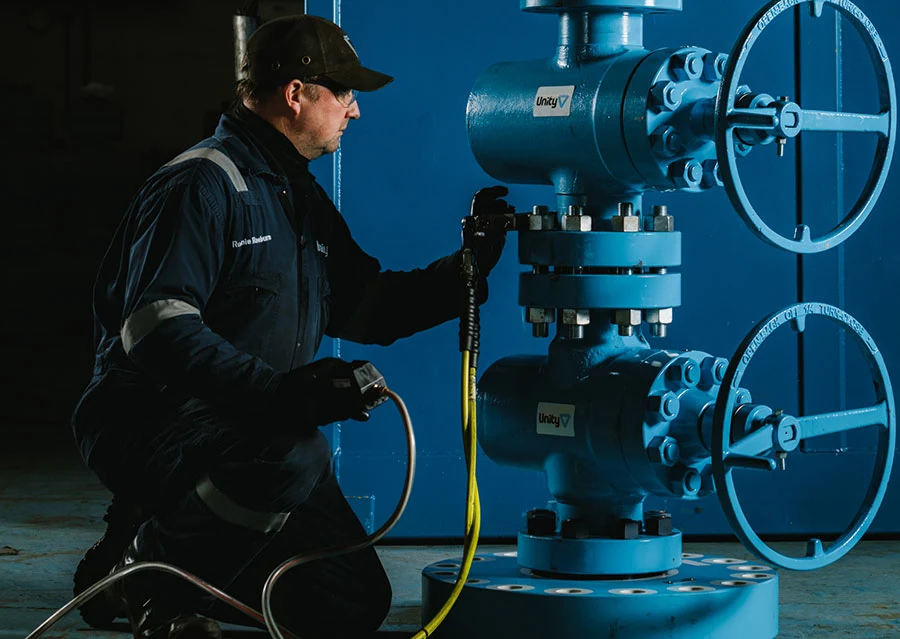
Recent North Sea projects demonstrate the growing value of compact, flexible shallow intervention technologies. These systems enable operators to complete preparatory work in tight spaces, below deck, or away from the primary drilling package and off the ‘critical path’. While the technology itself is important, its real impact lies in what it enables:
- Early access to wells and improved integrity assurance
- De-risked financial planning, mitigating high level cost and operating exposure
- Identification and mitigation of hazards ahead of execution
- Reduced operational risk and non-productive time
Lower POB requirements and reduced deck space constraints
The message is clear, the more work that can be safely and smartly completed early, the smoother and more predictable the final decommissioning phase becomes.
The role of the well integrity partner is evolving. No longer limited to abandonment support, today’s specialists act as long term custodians of wells, offering technical insight, rapid responsiveness, clarity and production restoration throughout the late life phase.
This stewardship ensures that each well’s story ends responsibly, efficiently and with full confidence in its integrity.
Operators are increasingly recognising the value of this kind of partnership. It allows them to make well informed decisions, build more robust decommissioning schedules and ensure critical knowledge is not lost during the transition from operations to end of life planning.
Decommissioning represents one of the industry’s most significant challenges over the coming decades. As cost pressures increase and stakeholder expectations rise, there is both an opportunity and a responsibility to rethink how wells are prepared for their final chapter. Decommissioning represents one of the industry’s most significant challenges over the coming decades. As cost pressures increase and stakeholder expectations rise, there is both an opportunity and a responsibility to rethink how wells are prepared for their final chapter. A culture of early engagement, supported by specialist well integrity insight and flexible engineering solutions, represents the next evolution in responsible decommissioning.
Executing a campaign efficiently is critical, but equally important is ensuring that the end of a well’s life is managed with the same discipline, care and professionalism that defined its years of production.
“From our platform to LinkedIn’s energy professionals – your announcements reach the entire sector’s network, not just our readers.”