


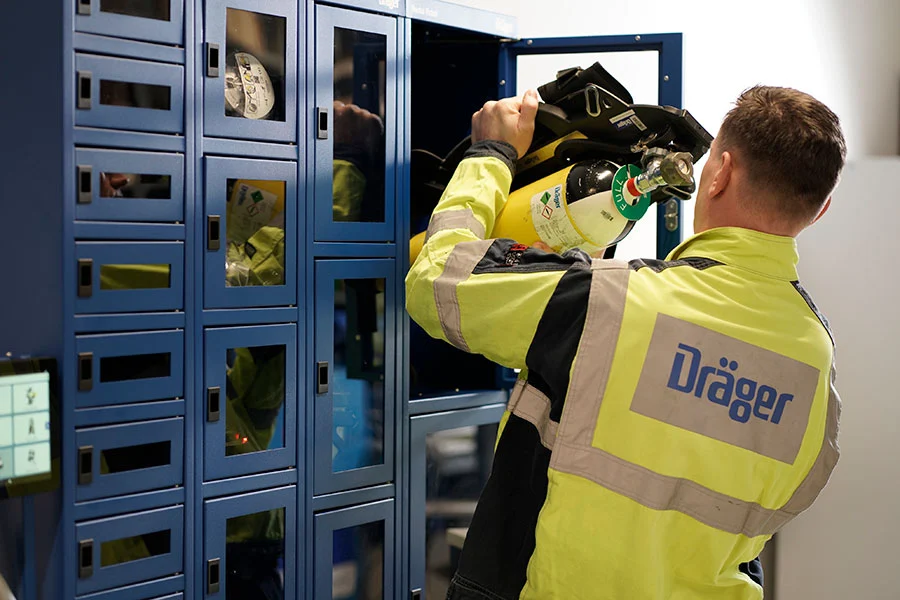
Owning safety equipment has long seemed the natural and responsible choice for many organisations, offering both control and immediate availability. While it is still considered the default option for many, is it still the most effective approach in today’s operational environments?
With each passing decade most industries, from oil and gas to pharmaceuticals, take on a more stringent approach to safety and compliance, driven by regulatory guidelines and operational efficiency alike. What once sufficed as a straightforward investment is now often accompanied by hidden complexity and unforeseen costs.
The upfront purchase for owned equipment is only the initial spend. Alongside it comes a whole range of additional responsibilities: maintenance, calibration, servicing, storage and lifecycle management. Not only do these extra considerations place significant pressure on internal teams, but there is also the additional risk of equipment becoming outdated, both in keeping up with the technical landscape and the regulatory one. Add to that the potential for downtime or underutilisation, and the true cost of ownership quickly becomes less predictable.
Meanwhile, operational needs across industries are becoming more dynamic. Projects can rapidly scale up and down, with shutdowns and short-term work requiring hasty mobilisation. In this context, and paired with matching the pace of technology, a static ownership model often can’t provide the flexibility that organisations need to respond effectively. This explains why, then, many are starting to rethink the approach.
Where ownership can stall, rental and service-based models offer a more agile alternative, where safety provision can be aligned with real-world demand.
Dräger Rental & Safety Services (RSS) offer organisations access to fully maintained, ready-to-use equipment for the precise timescale required. What’s more, additional responsibilities such as managing servicing schedules and compliance updates are no longer a worry; everything is handled as part of the service.

The rental model also allows for scalability. Equipment can be deployed quickly and adjusted on a reactive basis, whether it be in supporting a short-term project, managing peak workloads or responding to unexpected regulatory changes. Rather than the commitment of large upfront investments, organisations can cut down their capital expenditure with a cost pattern that aligns with the more predictable stages of their operations.
The worry about falling behind the latest technology and regulatory standards is also quashed by opting for the rental model and therefore always obtaining the most up-to-date and compliant equipment. This provides an added layer of confidence for organisations, ensuring that they never get caught out and have to scramble to get unstuck.
Overall, the model enables faster mobilisation, reduces administrative burden and allows teams to focus on core operations rather than equipment management. It recontextualises safety for organisations, from a fixed asset into a flexible, responsive capability.
Feedback from one of Dräger’s customers, who opted for its RSS on a recent project, clearly illustrates the ease of the service: “The three installation periods performing so well is testament to Dräger’s professionalism, commitment and teamwork”.
Of course, none of this means ownership no longer has a place. For some organisations and particular use cases, it remains a valid option. But it’s no longer the only, nor always the best, solution.
As operational demands continue to shift, access to the right safety equipment, at the right time, is becoming just as important as ownership itself.
That’s why Dräger is shining a spotlight on Rental & Safety Services through its Ready when you are campaign: exploring how flexible access to equipment, expert support and scalable solutions can help organisations stay safe, compliant and prepared for whatever comes next.
“When you share your news through GEN, you’re not just getting coverage – you’re getting endorsed by the energy sector’s most trusted voice.”