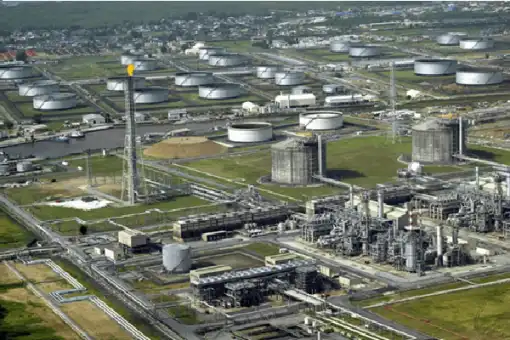
Africa’s oil market in 2026 reflects a blend of vast resource potential and persistent structural inefficiencies, as the continent continues to balance strong crude production with limited downstream capacity.
The continent holds about 7–8 per cent of global proven crude reserves, yet captures only a limited share of downstream value due to inadequate refining capacity. Total refinery capacity is estimated at between 3.5 and 4.0 million barrels per day, but utilisation across many countries remains below 50 per cent, widening the gap between production and domestic supply.
This imbalance has led to significant revenue losses, with Africa spending an estimated $60–90 billion annually on refined petroleum imports, despite exporting crude oil worth far more. The trend underscores a long-standing weakness, as oil-producing nations continue to rely on imports due to ageing infrastructure, low refining complexity and underinvestment.
This imbalance has led to significant revenue losses, with Africa spending an estimated $60–90 billion annually on refined petroleum imports, despite exporting crude oil worth far more. The trend underscores a long-standing weakness, as oil-producing nations continue to rely on imports due to ageing infrastructure, low refining complexity and underinvestment.
The ranking of the continent’s top refineries in 2026 highlights not just capacity, but a broader shift towards improved self-sufficiency, though progress remains uneven.
1. Dangote Refinery, Nigeria (Capacity: 650,000 bpd)
The Dangote Petroleum Refinery remains one of the world’s most ambitious private downstream projects, built by Dangote Industries as a fully integrated refining and petrochemical complex under an Engineering, Procurement and Construction (EPC) model. Located in the Lekki Free Trade Zone, Lagos, the facility spans about 2,635 hectares and required extensive land reclamation, with over 65 million cubic metres of sand used to stabilise the site.
With a refining capacity of 650,000 barrels per day, the plant is expected to play a pivotal role in Nigeria’s energy landscape. Construction has engaged over 30,000 workers, while full operations are projected to generate about 100,000 direct and indirect jobs. Designed to meet global environmental standards, the refinery is positioned to serve both domestic and export markets.
2. Skikda Refinery I, Algeria (Capacity: 356,500 bpd)
Skikda Refinery I anchors Algeria’s downstream operations, with a capacity of about 356,500 barrels per day. Integrated into a broader industrial complex, the refinery supports both domestic fuel supply and export markets, forming a key part of the country’s energy strategy.
Operated by Sonatrach, the refinery produces a wide range of products, including gasoline, diesel, jet fuel and petrochemical feedstocks. While over half of output serves the local market, the balance is exported, reinforcing Algeria’s position as a regional energy supplier.
3. Sasol Refinery, South Africa (Capacity: 250,000–300,000 bpd)
Sasol operates a dual refining system combining conventional crude processing with coal-to-liquids technology, delivering over 250,000 barrels per day in fuel output. The Natref refinery in Sasolburg processes imported crude into key transport fuels, while the Secunda complex remains the world’s largest coal-to-liquids facility.
Together, the assets form a critical backbone for South Africa’s fuel supply, supporting domestic demand and aviation needs. The system underscores Sasol’s integrated approach to energy and chemicals production.
4. Ras Lanuf Refinery, Libya (Capacity: 220,000 bpd)
Ras Lanuf refinery, located on Libya’s Gulf of Sidra, is the country’s largest refining facility with a capacity of 220,000 barrels per day. Built in 1984, the plant was designed as an export-oriented complex integrated with petrochemical production.
5. Port Harcourt Refinery, Nigeria (Capacity: 210,000 bpd)
The Port Harcourt Refining Company operates a dual-complex system comprising a 150,000 bpd modern plant and an older 60,000 bpd facility, bringing total installed capacity to about 210,000 barrels per day. The refinery produces a range of products, including gasoline, diesel, kerosene and LPG.
Despite its capacity, utilisation has remained below optimal levels due to maintenance and operational constraints, with output often falling short of design expectations.

6. Mostorod Refinery, Egypt (Capacity: 161,000 bpd)
Egypt’s Mostorod refinery has been transformed into a modern processing hub through a $4.3 billion upgrade led by the Egyptian Refining Company. The facility now processes up to 161,000 barrels per day, focusing on converting heavy fuel oil into higher-value products.
Output includes Euro V diesel, jet fuel, gasoline and LPG, supporting both domestic demand and regional supply. The project reflects Egypt’s drive to modernise its downstream sector.
7. El Nasr Refinery, Egypt (Capacity: 131,000 bpd)
The El Nasr refinery, one of Egypt’s oldest, continues to play a key role in the country’s downstream operations with a capacity of about 131,000 barrels per day. The facility produces a broad range of fuels and industrial products, supported by multiple distillation and processing units.
Recent upgrades, including a new condensate distillation unit, aim to boost efficiency and output, aligning with Egypt’s strategy to reduce import dependence.
8. Warri Refinery, Nigeria (Capacity: 125,000 bpd)
The Warri Refining and Petrochemical Company, located in Delta State, has a capacity of 125,000 barrels per day. Commissioned in 1978, the complex combines fuel production with petrochemical operations, producing gasoline, diesel, kerosene and industrial feedstocks.
Supported by significant utilities and storage infrastructure, the refinery remains a key component of Nigeria’s southern fuel supply network.
9. Skikda Refinery II, Algeria (Capacity: 122,000 bpd)
Skikda Refinery II complements the main Skikda complex, with a capacity of about 122,000 barrels per day. The facility enhances Algeria’s refining depth and supports its export-oriented energy strategy.
Ongoing upgrades are expected to improve efficiency and expand capacity, strengthening the country’s downstream capabilities.
10. Kaduna Refinery, Nigeria (Capacity: 110,000 bpd)
The Kaduna Refining and Petrochemical Company, located along Kachia Road, has a capacity of 110,000 barrels per day. Built to serve northern Nigeria, the refinery includes both fuels and lubricants processing units.
However, output has remained below capacity due to operational challenges, with ongoing rehabilitation efforts aimed at restoring production and improving efficiency.
“Join the companies that smart energy professionals follow – because when you’re featured on GEN, the industry pays attention.”