


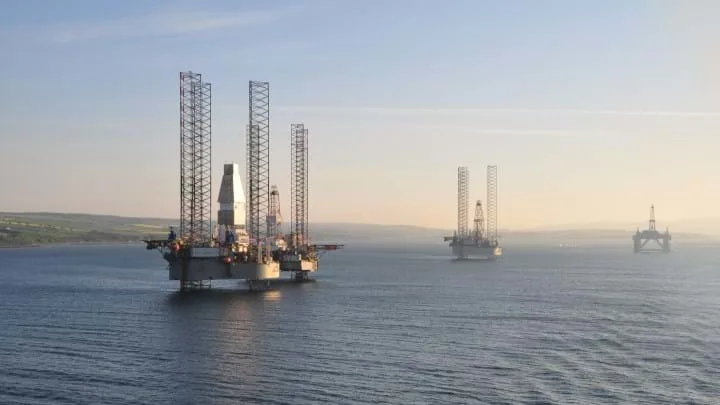
Five North Sea oil and gas projects are queuing behind Rosebank and Jackdaw for environmental consent, as UK Energy Secretary Miatta Fahnbulleh confirmed this week that a decision on Jackdaw is imminent while Rosebank will take a little longer.
The revelation, reported exclusively by The Scotsman, underlines the scale of investment that hangs on the Burnham government’s decisions. The five projects collectively target production of oil and gas between 2027 and 2030, all hold existing exploration licences, and several are structured as tie-backs to existing infrastructure — a format the government has previously indicated it is prepared to support.
The five projects are:
Tornado — approximately 153 kilometres west of Shetland, operated by Ithaca Energy and Adura. A subsea gas development tied back to the Greater Laggan infrastructure, targeting up to 94 million barrels of oil equivalent. First gas expected in the fourth quarter of 2029.
Cambo — approximately 133 kilometres west of Shetland, operated by Ithaca Energy. Nine new subsea wells and four water injection wells, with an estimated 170 million barrels of oil equivalent over the lifetime of the field. First oil targeted Q4 2030.
Kyla — approximately 196 kilometres southeast of Peterhead in the Central North Sea, operated by Serica Energy. A single subsea well tied back to the Bittern infrastructure with up to 12.7 million barrels of oil equivalent estimated over its lifetime. First oil targeted Q3 2028.

Montrose Infill — approximately 190 kilometres northeast of Peterhead, operated by NEO NEXT and Energy Resources. A subsea tie-back to the Montrose platform covering four production wells, with an estimated 100 million barrels of oil equivalent. First oil expected Q4 2028.
Abbey and Baker — approximately 40 kilometres off the Yorkshire coast in the Southern North Sea, operated by Petrogas. Four subsea gas wells tied to existing Abbey production infrastructure, with an estimated 29 million barrels of oil equivalent. First gas targeted for 2029.
Speaking at the Energy UK annual conference in London, Fahnbulleh said her department had completed its assessment of Jackdaw and that a decision would be imminent, while Rosebank would require more time. She declined to indicate what the outcome of either decision would be, but said her first two months in the role had been dominated by both questions and that she wanted to reach conclusions as quickly as possible.
Offshore Energies UK market intelligence manager Ben Ward said Jackdaw and Rosebank sit within a much broader opportunity across the North Sea, with industry identifying a pipeline of 111 projects within existing licences that could unlock £50 billion of private investment and 3.25 billion barrels of oil equivalent of domestic production. Ward said a stable, competitive fiscal and regulatory regime was essential to sustain production above one million barrels of oil equivalent per day into the 2030s.
Adura, which operates both Rosebank and Jackdaw and is the joint venture partner on the Tornado project, has said gas production at Jackdaw could begin as early as this winter if consent is granted without further delay.
The decisions come as the Burnham government prepares its Energy Independence Bill, which is expected to formalise in law the ban on new exploration licences while also creating a framework for tie-back projects connected to existing infrastructure. The balance between those two commitments is what the Rosebank and Jackdaw decisions will effectively define in practice.
“Join the companies that smart energy professionals follow – because when you’re featured on GEN, the industry pays attention.”