The Middle East war sent shockwaves through global energy markets, including in Europe which saw spiking natural gas prices as Qatar’s LNG exports went offline and its liquefaction complex at Ras Laffan, the world’s largest, was hit by Iranian missile strikes.
Governments across Europe scrambled to contain the fallout from the spiking energy prices and boost domestic resource development, mainly renewable energy installations, while companies announced milestones in several key clean energy projects across the UK and Europe.
Oil & Gas
The war in the Middle East, the strikes on LNG infrastructure in Qatar, and the de facto closure of the Strait of Hormuz, through which 20 percent of global LNG flows pass, have triggered a sharp spike in European gas and power prices. The Title Transfer Facility (TTF) benchmark for Europe’s gas trading more than doubled between March 2 and March 20 in the biggest surge since the 2022 energy crisis as Qatar’s LNG supply is now offline and is set to remain off the market for a prolonged period of time after Iranian strikes left the Ras Laffan complex with “extensive damage,” as QatarEnergy itself has acknowledged.
The shock from the loss of a large portion of global LNG supply is transmitting directly into European power markets, with price reactions varying according to national gas exposure, intelligence firm Rystad Energy said.
The sharp move higher in gas prices did not remain confined to commodity markets and directly fed into European wholesale electricity pricing through the market’s price formation mechanism.
“Beyond the immediate volatility, the market reaction underscores the structural linkage between global LNG supply, European electricity pricing and Europe’s broader energy security trajectory,” said the consultancy, noting that “This escalation in conflict strengthens the structural case for accelerating the energy transition.”
The gas-exposed markets in Europe now see strengthening renewable project economics through improved capture prices and revenue expectations, according to Rystad Energy.
In the broad picture, the war in the Middle East is likely to shift the policy lens back towards energy security.
“The sharp move in gas and power markets following the strikes over the weekend and this week highlights that Europe’s structural vulnerability lies in continued dependence on imported fossil fuels exposed to geopolitical risk,” Rystad Energy said.
Energy consultancy Wood Mackenzie noted that the extended outage in Qatar, the world’s second-largest LNG exporter behind the United States, risks tightening global supply, raising prices, and delaying capacity growth through 2028.
“Market expectations had been for a short disruption, with a controlled restart restoring supply to pre-conflict levels by mid-2026. That outlook now appears increasingly unlikely,” said Kristy Kramer, Head of LNG Strategy and Market Development at WoodMac.
“A more prolonged outage would further tighten the global supply and keep prices elevated for longer.”
Each additional month of disruption removes around 1.5 percent from annual global LNG availability, reckons Daniel Toleman, research director, global LNG, at Wood Mackenzie.
“Even if supply were maintained at 2025 levels, the market would still face demand destruction in Asia, lower storage injections in Europe, and sustained upward pressure on gas and LNG prices,” Toleman said.
Lower LNG availability in Europe is expected to reduce storage injections through the summer and accelerate fuel switching. Gas-to-coal switching is likely to continue. European storage levels may only reach around 70 percent when the 2026/2027 winter approaches, below the recent average, according to Wood Mackenzie.
Low-Carbon Energy
In response to the events in the Middle East, UK Energy Secretary Ed Miliband outlined in the middle of March a package of measures to go “further and faster” in the pursuit of national energy security.
To boost the UK’s energy security, the UK government announced that ‘plug-in solar’, low-cost solar panels that families can buy at supermarkets and put on their balconies or outdoor space, will be made available in the UK for the first time.
The UK also intends to bring forward the next annual renewables auction to July, inviting renewables companies to invest in UK energy. The most recent round was the biggest ever for clean energy in Britain.
The government is also working with the Competition and Markets Authority (CMA) to ensure that fuel suppliers cannot engage in unfair practices towards consumers such as price gouging.
“Global events demonstrate there’s not a moment to waste in our drive for clean power because there can be no energy security while we are so dependent on fossil fuels,” Miliband said.
“Everything we are doing is about one purpose: fighting the corner of the British people by taking back control of our energy.”
RenewableUK has welcomed the government’s decision to bring forward to July the next annual clean energy auction, Contracts for Difference Allocation Round 8.
“Recent global events have shown, yet again, how exposed we remain to shocks in international fossil-fuel markets, and the best way to reduce that vulnerability is to generate more of our own electricity here in the UK, at the stable prices wind and solar offer,” RenewableUK chief executive Tara Singh said.
“There could be as many as 18 offshore wind farms potentially competing for contracts, alongside new onshore wind and solar sites…To secure it, developers need clear and decisive action on grid connection dates, charges and delivery timelines, so that projects can bid with confidence.”
Reliance on internationally-traded gas has left the UK over-exposed to global price shocks, fiscal risk and hostile state activity, warned a new report by Public First, produced in collaboration with the Royal United Services Institute (RUSI) and commissioned by RenewableUK.
The report highlights the importance of investing in and safeguarding the UK’s domestic energy supply as a national security priority, recognising that there are unique benefits to renewables playing the leading role in maintaining a resilient low-cost power system.
While the UK’s energy system is resilient, this comes with a heavy price tag for consumers due to unpredictable spikes in the costs of fossil fuels, according to the report.
In light of the events in the Middle East, the WindEurope association said that home-grown electricity from renewables is Europe’s only future-proof energy strategy.
“With the closure of the Strait of Hormuz, Europe wakes up, yet again, to its dependence on unreliable fossil fuel imports. This is not a one-off. This is the new normal,” WindEurope said, adding that “Europe needs to come together and focus ruthlessly on switching from fossil fuels to home-grown clean electricity.”
To deliver on goals, offshore wind in particular, Europe needs stronger ports and shipyards to support the supply chain, WindEurope said in a separate call to stakeholders.
The offshore wind expansion, especially in the North Sea, might soon hit a new bottleneck in the ports and shipyards.
“Europe’s offshore supply chain is only as strong as the ports and vessels that support it,” WindEurope said.
In company news, Kight PowerHub said it would build a battery manufacturing facility in Dumfries, the first domestic battery factory in Scotland.
John Swinney, First Minister of Scotland, visited the Dumfries site where the new manufacturing facility will create up to 700 high-technology jobs in the south of Scotland.
The Dumfries facility will be the first home energy storage factory in Scotland and serve as the primary assembly plant for the Kight Powerhub.
The UK-designed and assembled Powerhub uses a pioneering battery chemistry never previously deployed in domestic settings, delivering zero fire risk, backed by leading insurance companies with 100 percent usable capacity at all times, a 25-year industry-leading warranty with up to 20,000-cycle lifespan and full battery back up in the event of a power grid outage, Kight said.
Norwegian energy major Equinor has entered into a 2-year bio-methanol supply agreement with Wallenius Wilhelmsen, a major global player in shipping and vehicle logistics, supporting a growing marine segment for low-carbon fuels. Under the agreement, Wallenius Wilhelmsen will receive the bio-methanol bunkers at the Ports of Zeebrugge and Antwerp, positioning the partnership within key European maritime hubs. Supplies will commence in late 2026, Equinor said.
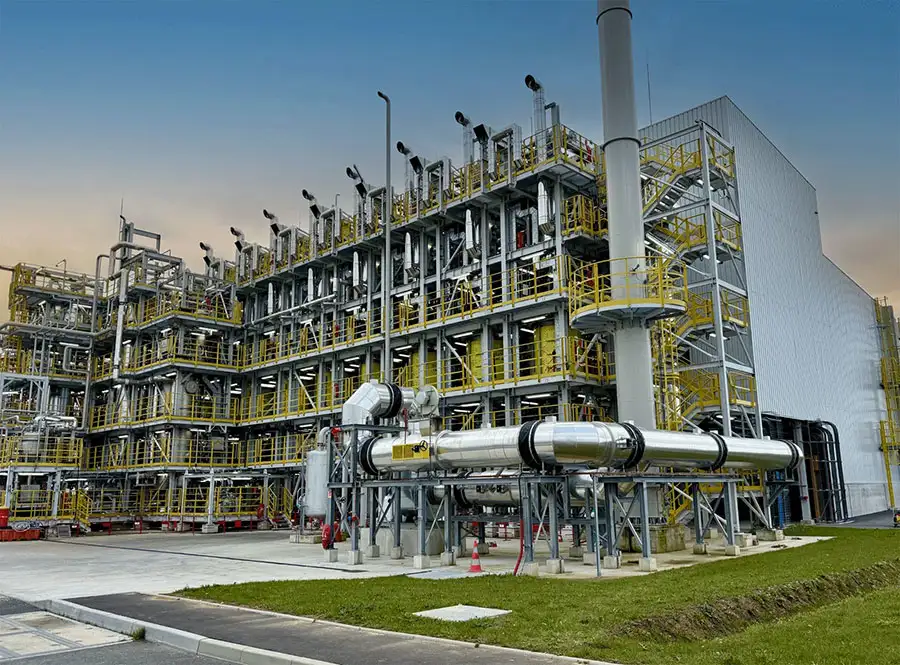
Another major energy company, TotalEnergies, has launched France’s first advanced plastics recycling plant, with an annual capacity of 15,000 tons, at its Grandpuits site southeast of Paris. This start-up marks another step in the conversion of the Grandpuits refinery into a zero-crude platform.
The new plant uses innovative recycling technology supplied by TotalEnergies’ partner Plastic Energy. It transforms hard-to-recycle plastic waste from French households, which is currently sent to landfill or incineration, into a synthetic oil through a pyrolysis process, involving heating the waste to high temperatures in an oxygen-free environment and under pressure. This advanced recycling process makes it possible to recycle waste that cannot be recycled mechanically.
The synthetic oil is then treated as petrochemical feedstock, as a substitute for fossil fuels. It contributes to producing recycled plastics of the same quality as virgin plastics, compatible with the strictest requirements for food contact and medical applications, TotalEnergies said.
“The start-up of the first advanced plastics recycling plant in France is an important milestone in the conversion of our Grandpuits site into a zero-crude complex,” said Valérie Goff, Senior Vice President, Renewables, Fuels & Chemicals at TotalEnergies.
“Alongside Plastic Energy, contributing its technology, and our partners Citeo and Paprec, we are supporting the emergence of a brand-new French plastic recycling activity”.
“Join the companies that smart energy professionals follow – because when you’re featured on GEN, the industry pays attention.”