


The war in the Middle East and the de facto closure of the Strait of Hormuz have created the worst oil and gas supply disruption in the history of energy markets.
The sudden disappearance of about 20 percent of daily global oil and LNG flows via the Strait of Hormuz sent oil and gas prices surging, importers scrambling for supply that is not trapped in the Middle East, and nations looking to contain fuel shortages and a major inflation spike due to the energy supply shock.
Before the war, both the oil and gas markets were expected to see growing oversupply over the coming months and years. But the conflict upended all these forecasts of glut, and moved the markets into structural deficits that would take months, and in the case of LNG possibly years, to recover.
In addition, the closure of the key export route for Middle East’s oil to most tanker traffic has forced all major producers in the Gulf to slash upstream production. Some upstream, refining, and port assets in the Middle East have also been hit by Iranian drones or missiles that have damaged the infrastructure, further complicating efforts to put production and exports back online once the export routes are clear to navigate again.
Middle East Producers Slash Output
The biggest producers in the Gulf have already had to curtail upstream production. Iraq, Saudi Arabia, Kuwait, and United Arab Emirates (UAE) have all slashed output as storage onshore and on tankers filled up, and tankers had no way out of the Strait of Hormuz.
Only Saudi Arabia has meaningful capacity to redirect more than half of its crude oil exports from the Strait of Hormuz-bound export ports to the Yanbu port on the Red Sea. But even the accelerated loadings at Yanbu could not fully offset the loss of available export capacity via Hormuz, forcing Saudi Aramco to slash its term supply to Asia for April loading cargoes.
As of March 11, Gulf producers had cut total oil production by at least 10 million barrels per day (bpd), the International Energy Agency said in its monthly report for March. Supply losses have increased since this assessment as the conflict dragged on well beyond the middle of March.
Moreover, more than 3 million bpd of refining capacity in the region has shut due to attacks and a lack of viable export outlets. Refinery runs elsewhere have become increasingly limited due to restricted feedstock availability.
Disruptions have not been limited to upstream production and exports, with several refineries and gas processing facilities shut down due to attacks or for safety concerns, said the IEA.
“The war in the Middle East is creating the largest supply disruption in the history of the global oil market,” the agency noted.
The Cost of War
Apart from production curtailments and spending later to restart wells once the Hormuz crisis is resolved, energy producers in the Gulf face billions of US dollars of spending on repairing infrastructure that has been hit by Iranian strikes. The loss of refining and LNG capacity will extend way beyond the eventual opening of the Strait of Hormuz to free traffic.
The damage and shutdowns in the Middle East have affected LNG trains, refineries, fuel terminals, and critical gas-to-liquids facilities. The costs to repair and restore energy infrastructure damaged as of 25 March could reach at least $25 billion, according to Rystad Energy’s estimates, based on an initial assessment of impacted facilities.
Costs are expected to rise further, and spending is set to be chiefly driven by work on engineering and construction, followed by expenditure on equipment and materials, the energy intelligence firm said.
“The Gulf region’s recovery will be defined less by financial capital and more by structural constraints. While some assets may be restored within months, others could remain offline for years,” commented Audun Martinsen, Head of Supply Chain Research at Rystad Energy.
“Beyond the status of the Strait of Hormuz, every day of damaged or shut-in infrastructure pushes pre-war production capacity further out of reach,” Martinsen noted.
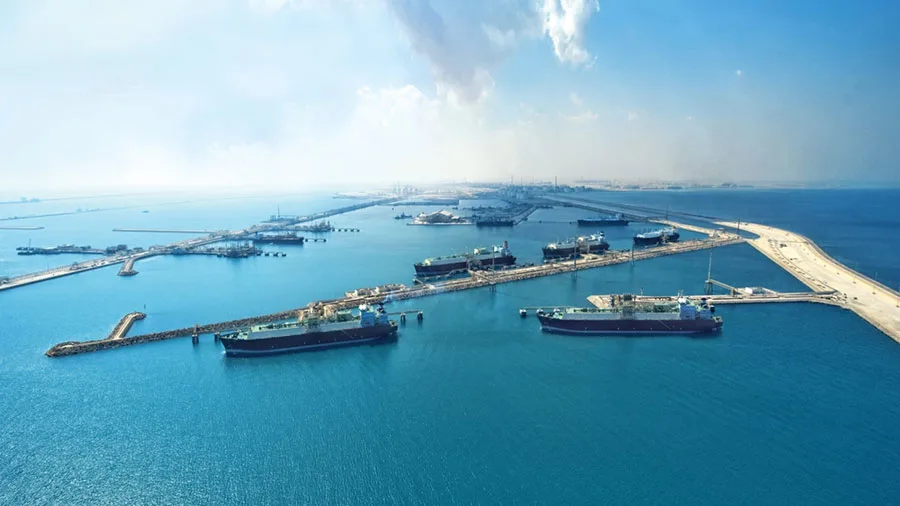
So far, the biggest damage is estimated to be at Iran’s South Pars offshore field and Qatar’s Ras Laffan LNG facility, according to Rystad Energy.
“The scale of damage and long lead times for critical equipment could result in slow recovery at Ras Laffan, while Iran’s legal exclusion from Western supply chains means it will have to rely on Chinese and domestic contractors, which is a technically feasible approach that could be slower and more expensive.”
Moreover, urgent repairs will have to take precedence in place of planned expansion, Martinsen noted.
As operators are likely to prioritise restoring existing fields instead of new developments, demand for EPC contractors and OEMs will rise, especially those with regional experience and existing agreements with national oil companies.
Near-term work will most likely focus on inspection, engineering, and site preparation, followed by equipment replacement and construction as procurement constraints ease, Rystad Energy reckons.
QatarEnergy has already warned that the damage to its Ras Laffan Industrial City caused by missile strikes would cost the Qatari state energy firm about $20 billion a year in lost revenue and take up to five years to repair, impacting supply to markets in Europe and Asia.
The attacks damaged two LNG producing Trains 4 and 6 totalling 12.8 million tons per annum (MTPA) of production, representing approximately 17 percent of Qatar’s exports.
In the early days of the war, even before the strikes on Ras Laffan, QatarEnergy had stopped production of LNG and associated products and declared Force Majeure to its affected buyers.
The damage sustained by the LNG facilities following the strikes at Ras Laffan “will take between three to five years to repair,” said Saad Sherida Al-Kaabi, Qatar’s Minister of State for Energy Affairs and president and CEO of QatarEnergy.
“The impact is on China, South Korea, Italy and Belgium. This means that we will be compelled to declare force majeure for up to five years on some long-term LNG contracts,” Al-Kaabi noted.
The attacks also targeted the Pearl GTL (Gas-to-Liquids) facility, a production sharing agreement operated by Shell, which converts natural gas into high-quality cleaner burning drop-in fuels and produces base oils used to make premium engine oils and lubricants, and paraffins and waxes.
“The damage caused to one of the two trains at Pearl GTL is being assessed and is expected to be offline for a minimum of one year,” Al-Kaabi added.
Qatar’s output of condensates, LPG, naphtha, sulphur, and helium has also suffered losses due to the outage.
The outage of Qatari LNG is one of the most severe gas market shocks of the past decade.
“A disruption of this magnitude exposes how little flexibility exists in global LNG markets,” Josephine Mills, senior analyst at Enverus Intelligence Research, says.
“With short‑run LNG supply elasticity extremely limited, price rather than volume must absorb the adjustment, leaving global gas prices highly vulnerable if the outage is prolonged.”
Wood Mackenzie, for its part, comments that the damage to Ras Laffan fundamentally alters the global gas market outlook.
“Market expectations had been for a short disruption, with a controlled restart restoring supply to pre-conflict levels by mid-2026. That outlook now appears increasingly unlikely,” said Kristy Kramer, Head of LNG Strategy and Market Development at WoodMac.
“A more prolonged outage would further tighten the global supply and keep prices elevated for longer,” Kramer noted.