A key vessel has arrived at Rosebank as developers carry out work at the controversial development.
An untapped area of the North Sea containing the controversial Rosebank development should have its own dedicated fiscal and regulatory framework to prolong Scotland’s oil and gas sector, a new report has argued.
Research from the University of Aberdeen has found that the West of Shetland area of the North Sea holds around 5 billion barrels of oil and gas – the UK’s largest remaining offshore potential.
The Labour UK government has vowed to end new licensing for North Sea oil and gas projects while climate scientists and the International Energy Agency (IEA) have warned new fossil fuel developments are not consistent with global targets to cut harmful emissions.
The West of Shetland area of the North Sea includes the controversial Rosebank oil project, which is yet to receive environmental consent from Westminster after having to reapply following a landmark court case.
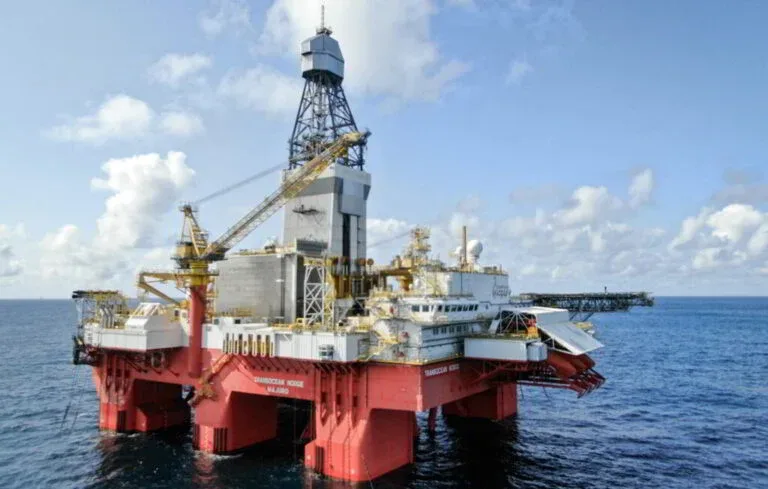
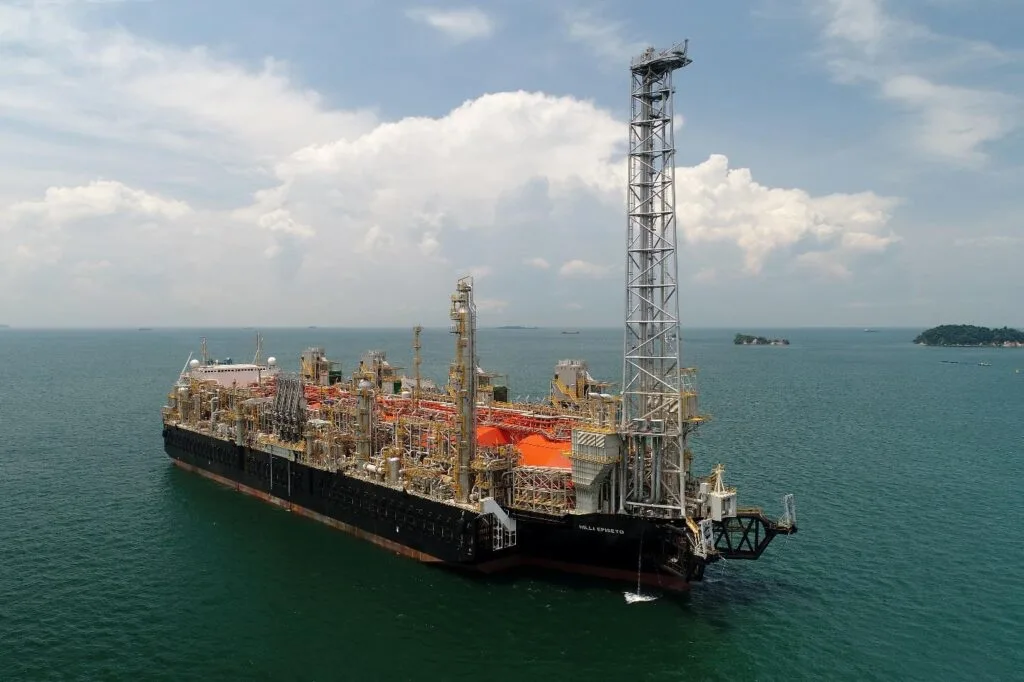
Despite developers Shell and Equinor’s joint venture, Adura, still awaiting for permission to proceed with Rosebank, the PetoJarl Rosebank Floating Production Storage and Offloading (PFSO) vessel left its dry dock in Norway last Saturday and has arrived in the West of Shetland basin.
Following the court ruling, developers were given permission to proceed with the project, including preparatory engineering and construction works – but no extraction is allowed to take place without final permission.
It is understood the vessel will undergo commissioning to be ready for production by the end of the year.
In March, Greenpeace activists launched a protest as the vessel was refuelling in Namibia.
The new study claims that it is economically, environmentally, and strategically beneficial for the UK to prioritise domestic oil and gas production rather than increasing reliance on imports.
The University of Aberdeen research highlights what researchers describe as a “widespread misconception” about the UK’s offshore energy resources.
The study adds that while production from the North Sea is in long-term decline, it claims that significant untapped potential remains in the West of Shetland basin, which is estimated to contain approximately 4.7 billion barrels of oil equivalent (boe) yet to be discovered.
However, the researchers caution that the region’s development is constrained by significant challenges, including limited infrastructure, complex geology, harsh operating conditions, and higher development costs, all of which have hindered investment and production so far.
A key and potentially controversial recommendation of the paper is the introduction of a dedicated fiscal and regulatory framework for the West of Shetland region.
The researchers argue that a “one-size-fits-all” approach to taxation of the UK continental shelf does not reflect the unique risks and costs associated with West of Shetland exploration, appraisal and development.
As a result, they claim that projects that are technically viable may remain economically marginal under current conditions.
According to the study, a proposed tailored regime would recognise higher exploration and development costs, account for increased geological and operational risk and encourage investment in challenging projects.
It would potentially enable so-called tie-backs to existing infrastructure that supporters claim would provide energy security, tax revenues, retain jobs and be better for the global climate than importing liquified natural gas (LNG), which carries a higher carbon footprint.
Nick Schofield, professor of igneous and petroleum geology, at the University of Aberdeen, said: “West of Shetland is not a depleted frontier – it is a technically demanding but strategically important energy province.
“Our study highlights the remaining oil and gas potential in the area, which could extend the life of the UK’s oil and gas sector.
“A bespoke licensing regime tied to existing infrastructure would provide a pragmatic pathway to unlock value while maintaining environmental and economic responsibility.”
John Underhill, Aberdeen University’s director for energy transition, added: “Failing to develop these domestic resources risks increasing the UK’s dependence on imports, with implications for emissions, costs, jobs, tax revenues and energy security.
“Without targeted fiscal measures and licensing regime, there is a real risk that significant volumes of recoverable resources will remain undeveloped.”

Offshore Energies UK (OEUK) energy policy director, Enrique Cornejo, said: “New research on the potential of areas such as West of Shetland demonstrates that continued domestic production is critical for our energy security.
“Producing our own oil and gas as long as there is demand for it supports jobs, investment and tax revenues, contributing to national resilience at a time of economic and geopolitical uncertainty.
“However, without the right policy and investment conditions, the UK risks leaving our energy resources stranded, increasing our reliance on imports.”
But climate campaigners have argued the study “looks like the latest attempt to pressure the government into handing tax breaks to an oil and gas industry already cashing in on windfall profits driven by Trump’s war with Iran”.
Tessa Khan, executive director of Uplift added: “Calling for lower taxes on oil and gas in this climate – when households are facing rising fuel and energy bills – is, to put it mildly, tone deaf.
“It doesn’t matter how it is presented, after 50 years of drilling, the North Sea is now a hyper-mature basin with over 90 per cent of its reserves already extracted, and what’s left is now mostly oil, the majority of which is exported.
“Oil from West of Shetland is also very expensive to extract, which explains why a field like Rosebank, which was discovered over 20 years ago, remains untapped.”
Richard Thomson, SNP candidate for Aberdeen South, said that “we should prioritise domestic supply over carbon intensive imports”.
He added: “This is an exciting report, but it underlines just how damaging Westminster control of our energy rich land is.”
Scottish Conservative candidate for Aberdeen South, Douglas Lumsden, said the study “exposes the madness of importing oil and gas when we have vast resources on our own doorstep”.
He added: “We still rely on oil and gas to keep the lights on, so it’s just common sense that we should drill the North Sea and these reserves would provide a welcome jobs boost and generate millions for our economy.”
A UK government spokesperson said: “Issuing new licences to explore new fields cannot give us energy security and will not take a penny off bills.
“The lesson of yet another fossil fuel crisis is the UK needs to get off the fossil fuel rollercoaster and onto clean homegrown power we control.”
An Adura spokesperson said: “Work is continuing on the Rosebank oil and gas project west of Shetland, which is significant for the UK’s future energy supply from the North Sea. Rosebank is set to create £8.5 billion of direct investment, of which £6.6 billion is likely to be invested in UK-based businesses.
“Rosebank will be among the lowest emissions developments in the UK Continental Shelf (UKCS), itself one of the most highly-regulated and lowest emissions oil and gas basins anywhere in the world.
“Rosebank is also expected to boost the UK’s wider economy by about £25 billion and create 2,000 UK jobs during its development phase. It will continue to support an average of 525 UK-based full-time jobs during the lifetime of the field and contribute significantly to UK energy security.”
“Join the companies that smart energy professionals follow – because when you’re featured on GEN, the industry pays attention.”