
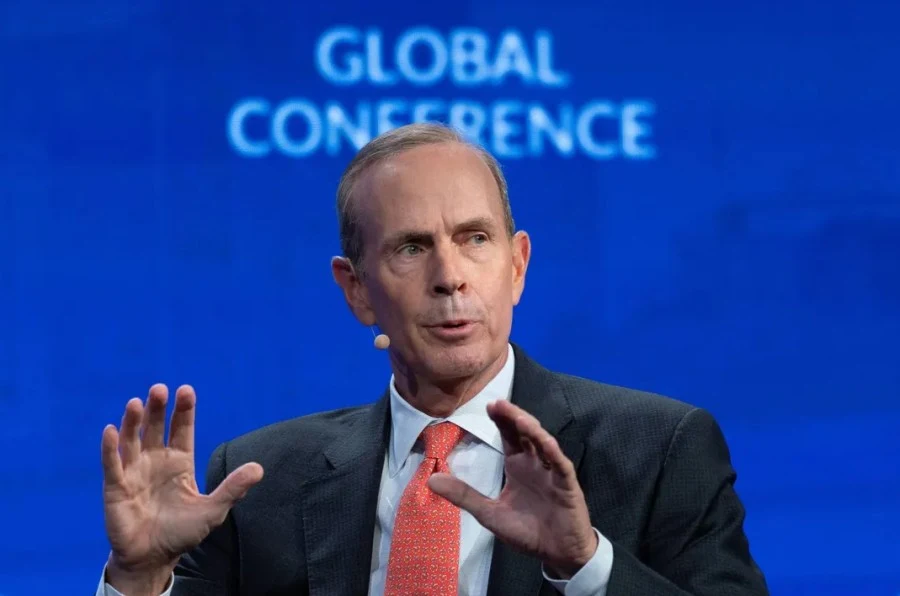
“The market’s ability to absorb this imbalance has deteriorated drastically today compared to where we started,” said the CEO at a conference.
Since the start of the war between the US and Iran, the Strait of Hormuz has been closed, preventing the shipment of oil through this waterway, which normally carries 20% of the global oil supply.
This has sent oil prices soaring since late February, although they have eased somewhat recently amid hopes for fruitful peace talks.
However, this could soon reverse again, warned Mike Wirth, CEO of the US’s second-largest oil company, Chevron.

“Buffers and shock absorbers are gradually being reduced, and the market’s ability to absorb this imbalance is drastically diminished today compared to where we started,” Wirth said Thursday at a conference, according to the Financial Times:
“Over the next few weeks, we will likely see that pressure feed more directly into physical prices, and there is more upward pressure, which I would expect as we head into June and certainly into July.”
The closure of the Strait of Hormuz has removed up to 13 million barrels of crude oil per day from the global market.
Since the start of the war, the price of oil has flirted a few times with USD 120 a barrel – an increase of nearly 80% compared to the price just before the war began – but it has since fallen back to just under USD 90 per barrel.
“Join the companies that smart energy professionals follow – because when you’re featured on GEN, the industry pays attention.”