


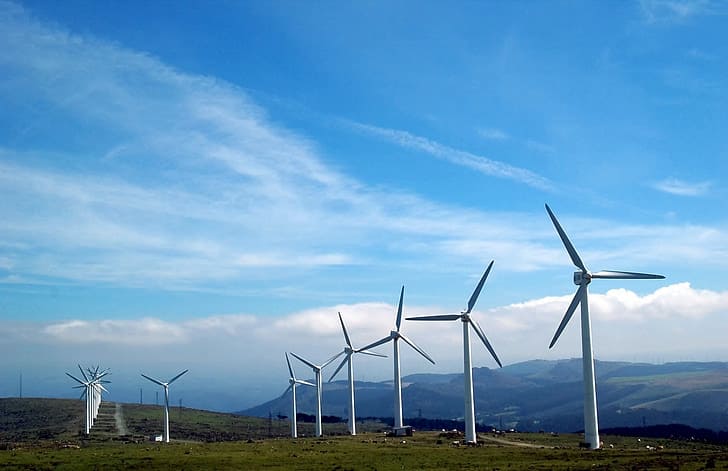
Britain’s renewable-energy ambitions face the same supply-chain and energy-security pressures reshaping Europe, with companies such as Zenith Energy investing in solar projects while navigating the infrastructure and materials needed for long-term growth.
Since Brexit, Britain has sat outside the European Union while facing many of the same strategic problems that have reshaped Europe’s energy policy: the loss of cheap Russian gas, exposure to volatile global energy markets, and heavy dependence on China for many of the minerals, components and technologies needed for the clean-energy transition.
Russia’s invasion of Ukraine exposed Europe’s dependence on Russian gas and fundamentally changed how governments view energy security. The UK was less directly dependent on Russian gas than some EU countries, but it was still exposed to the wider European energy shock and resulting price volatility.
A second dependency has become increasingly important: China’s position in the supply chains for many critical minerals, components and clean-energy technologies. Solar panels, batteries, grid infrastructure and other technologies required for the transition depend on supply chains that Britain does not fully control.
The contrast with Europe is important. Brussels responded to the shock from Russia through REPowerEU, combining energy diversification with faster deployment of clean energy. The EU has also developed the Critical Raw Materials Act, seeking to strengthen European capacity across extraction, processing and recycling while reducing dependence on individual external suppliers.
Britain has instead developed its own policy framework for energy security, clean power and critical minerals. The UK and EU therefore face broadly similar vulnerabilities, but are addressing them through separate frameworks. For Britain, the challenge is to expand renewable generation while building resilient supply chains and maintaining affordable, reliable electricity.
Solar and wind are central to that transition, but increasing generation capacity alone does not eliminate dependence on overseas supply chains. The practical barriers are familiar across Britain and continental Europe: slow permitting, constrained electricity grids, infrastructure bottlenecks and dependence on international manufacturing.
Every energy source also involves trade-offs. Solar is relatively inexpensive but heavily dependent on imported equipment and materials; wind requires substantial infrastructure and raw materials; nuclear offers reliable low-carbon power but requires major investment and long development timelines. There is therefore no single technology that can solve Britain’s energy-security problem.


The harder task is building an energy system in which generation, grids, storage, nuclear, renewables and the underlying supply chains reinforce one another. Europe’s experience since the Ukraine war shows that changing the source of energy does not necessarily eliminate dependence; it can move that dependence further down the supply chain.
Britain can build solar farms and wind turbines, but these projects ultimately depend on minerals and components sourced through global supply chains. China occupies an important position in processing and manufacturing materials and components used in clean-energy technologies. Replacing Russian hydrocarbons with renewable generation therefore does not automatically create energy independence.
The UK, like the EU, is looking increasingly at critical minerals, domestic production, recycling, processing and diversified international supply chains. Uranium provides a useful example: nuclear power can reduce dependence on fossil fuels, but nuclear generation itself depends on secure access to specialised inputs.
Zenith Energy provides a useful window into how this broader transition is taking place. The company has operated across gas and solar in Italy since 2012 and has expanded its Italian renewable portfolio, with 203.5 MWp of solar assets acquired in the last 12 months. Its first photovoltaic project in Puglia began construction in 2026, while the company continues to develop its wider Italian solar pipeline.
Zenith’s renewable activity also illustrates that the energy transition is not a clean break between an old energy system and a new one. Different sources and business models are coexisting while infrastructure for the next system is built. Its move into uranium exploration in Italy, through Reveille Resources PLC (Zenith Energy is their largest shareholder), adds another upstream dimension to the same question: how secure are the inputs behind Europe’s future energy system?
For a UK audience, the significance goes beyond Italy. Britain does not have to replicate the EU’s approach, but it cannot ignore the strategic problem that Europe has been forced to confront. Brexit has given the UK a separate policy framework, but not separate global supply chains. British energy security remains connected to European and Asian markets.
The lesson is less about choosing between a British or European model than recognising where the two face the same constraints. The UK’s clean-energy ambitions will need to be matched by greater attention to minerals, processing, manufacturing, infrastructure and diversified suppliers.
Britain’s renewable-energy future will not be determined simply by how many wind turbines or solar panels it builds. The harder question is whether it can secure the grids, technologies, materials and international supply chains required to build and maintain them.
“When you share your news through GEN, you’re not just getting coverage – you’re getting endorsed by the energy sector’s most trusted voice.”