


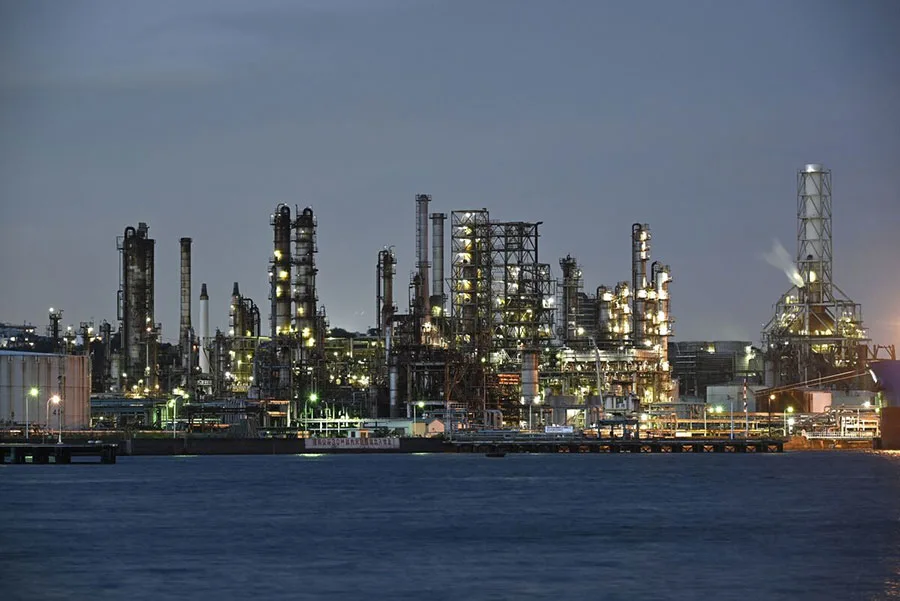
Cape Town, South Africa – The Central Energy Fund (CEF) Group CEO, Dr Tshepo Mokoka, has called for a fundamental shift in Africa’s energy development strategy, arguing that the continent’s future prosperity depends not only on extracting natural resources, but on building the industrial capacity to transform those resources into economic value, jobs and long-term energy security.
Addressing delegates at Africa Energy Week during a session on “Africa’s Refining Imperative: Capital Allocation, Project Bankability and Regional Supply Security,” Dr Mokoka said Africa possesses abundant oil and gas resources, yet continues to export raw value while importing refined products and exposing itself to supply vulnerabilities.
Africa does not only have a resource challenge. We have a conversion-capacity challenge. If we do not build the capacity to convert our resources, we will continue exporting value and importing vulnerability,” said Dr Mokoka.
He noted that recent global energy market disruptions have underscored the strategic importance of refining, storage and logistics infrastructure, particularly for countries that remain heavily dependent on imported fuels. According to Dr Mokoka, energy security can no longer be viewed solely through the lens of resource ownership, but through the ability to refine, transport, store and distribute energy products reliably and competitively
Refining Must Be Viewed as an Industrial Platform
Dr Mokoka emphasised that the discussion around refining should move beyond refinery throughput capacity and focus on the broader economic and industrial value that refining infrastructure can unlock.
We should not invest only in barrels per day. We should invest in value chains,” he said
He explained that modern refinery projects must increasingly be designed as integrated industrial ecosystems that support petrochemical production, manufacturing, logistics, storage infrastructure and downstream industries
A refinery should not be viewed simply as a fuel plant. It should be viewed as an industrial platform,” he added.
CEF’s strategic approach recognises global trends towards integrating refineries with petrochemical complexes and industrial clusters that create additional value from crude oil and refined products while supporting broader industrialisation objectives.
Bankability Requires Structured Risk Reduction
While highlighting the strategic importance of refining infrastructure, Dr Mokoka stressed that large-scale energy projects can only succeed when supported by strong commercial fundamentals and disciplined investment frameworks.
Strategic importance does not replace commercial discipline. It makes commercial discipline even more important,” he said
He argued that the key challenge for governments, development finance institutions and private investors is creating financing structures that progressively reduce project risk and attract different sources of capital at various stages of development.
You do not finance a US$7 billion project by starting with US$7 billion. You de-risk it in stages until it becomes bankable,” said Dr Mokoka.
As an example, he highlighted the South African National Petroleum Company (SANPC) Refinery Development Programme, which is being implemented through a phased approach that includes stabilisation initiatives, early revenue generation opportunities, feasibility studies, regulatory approvals, funding mobilisation and strategic partnerships before a final investment decision is taken
The proposed refinery is expected to have a processing capacity of 400,000 barrels per day, with an estimated refinery investment of approximately US$6.8 billion and a total programme investment of roughly US$7.15 billion.
Bankability begins with commercial reality. It requires feedstock security, credible offtake, logistics, infrastructure, regulatory certainty, competitive operating costs and appropriate risk allocation,” he said
Linking Upstream Development to Refining Capacity
Dr Mokoka further noted that refining projects cannot be developed in isolation from upstream oil and gas development.
You cannot make a refinery bankable without making its feedstock proposition bankable,” he said.
He pointed to the potential reinstatement of PetroSA’s Mossel Bay Gas-to-Liquids (GTL) operations, suspended since November 2020, as one of the strategic opportunities currently under consideration, subject to further commercial and feedstock assessments.

Our upstream and downstream strategies cannot be developed in separate silos. Feedstock security and refining capacity are two sides of the same investment equation,” he added.
positioning South Africa as a Regional Energy Hub
According to Dr Mokoka, South Africa’s refining ambitions should be positioned within the context of regional energy demand and growing opportunities across the African continent.
South Africa should not think about refining only as a domestic market proposition,” he said.
EF estimates indicate that imported fuels now account for approximately 61% of South Africa’s domestic fuel demand, compared to 22% in 2019. The SANPC Refinery Programme therefore presents an opportunity not only to strengthen domestic energy resilience, but also to position South Africa as a supplier of refined products and energyintensive goods to regional markets.
The opportunity is to move from being a consumer of imported refined products to becoming a regional supplier of energy and energy-intensive products,” said Dr Mokoka.
He added that energy security is increasingly becoming a regional rather than purely national concern, requiring coordinated investments in production infrastructure, storage facilities, transportation networks, logistics systems and cross-border energy value chains.
Energy security is no longer only a national question. It is increasingly a regional question,” he said.
Building Integrated Energy Ecosystems
Dr Mokoka said experience from major energy economies demonstrates that strategic infrastructure development is most successful when supported by partnerships between governments, development finance institutions and private investors
The state does not have to write every cheque. But it has a role in creating the conditions under which the cheque can be written,” he said.
CEF’s long-term strategy seeks to connect refining, upstream resource development, trading, storage, logistics and downstream industrial development into a single integrated energy ecosystem that supports national and regional growth
We need to stop thinking in individual projects and start thinking in energy ecosystems,” he said.
Beyond energy supply, Dr Mokoka highlighted the significant socio-economic impact such investments could generate. Current projections indicate that the SANPC Refinery Programme could support approximately 12,500 construction jobs and 2,850 permanent operational jobs, subject to successful project implementation.
Concluding his remarks, Dr Mokoka said Africa’s refining agenda must be viewed as part of a broader industrialisation and economic transformation strategy.
“The choice before Africa is not simply whether we refine more. It is whether we continue exporting value and importing vulnerability, or whether we build the capacity to convert our own resources into energy, industry and regional economic value,” he concluded.
“Your company news doesn’t just get published – it’s seen by the decision makers who matter.”