

As OEM / genuine maker lead times for parts production continue to extend, end users face rising operational downtime and increasing reliance on grey-market alternatives. Haakon Ellekjaer, CEO of Pelagus, outlines how on-demand manufacturing, enabled by digital inventories, unlocks rapid, traceable production.
For decades, global supply chains operated with predictable lead times and stable delivery expectations. End users ordered parts from OEMs, who built and delivered them within an agreed timeframe.
Over the past decade, marked by COVID-19 disruption and rising geopolitical tension, the fragility of traditional supply chains has been exposed. Under increasing pressure from end users, OEMs are now being forced to consider alternative production models.
In the maritime and energy sectors assets are built to last, with many now exceeding 20 years of age. Continuing safe and efficient operations often relies on the availability of legacy parts which may be difficult to source as OEMs discontinue production in favour of newer components.
When lead times extend beyond operational tolerance, buyers are forced into difficult decisions. The alternative is often the ‘grey market’, non-genuine parts that may carry significant risk but offer faster availability. Price is often not the issue; when a vessel must sail, the cost of waiting can far exceed the cost of the part itself. While OEMs can attempt to mitigate this through pre-stocked inventory, this approach is capital-intensive and inherently inflexible.
At the same time, expectations are evolving. Shipyards are increasingly requiring suppliers to provide digitised designs for parts – particularly for systems used for handling energy. However, many OEMs lack the internal capability to meet these requests.
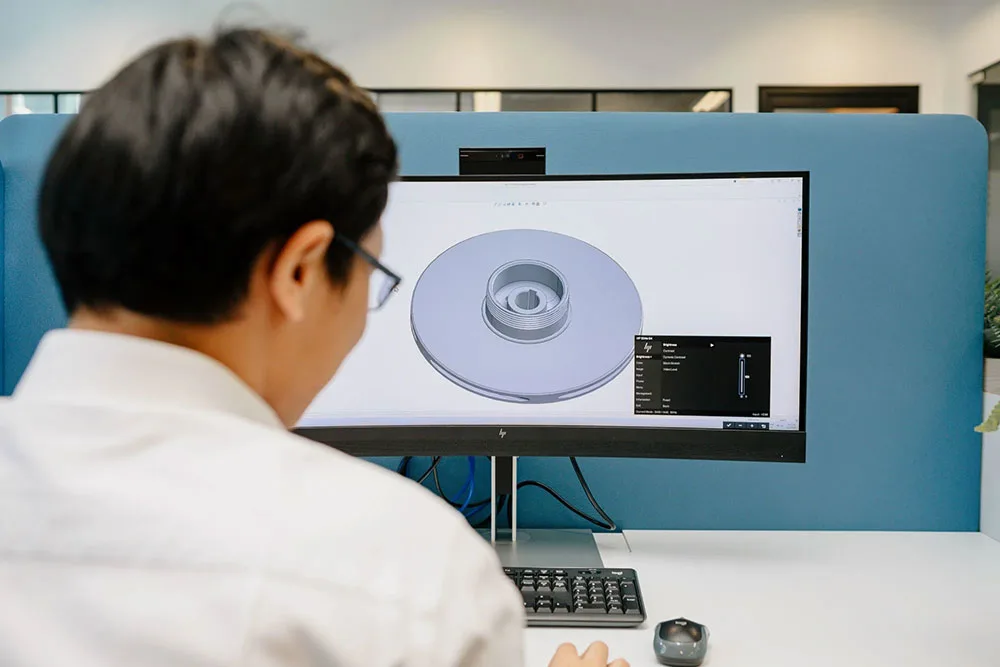
A different model is now emerging. On-demand manufacturing, enabled by digital inventories, allows parts to be produced closer to the point of need, reducing lead times while maintaining control over quality and specification. Rather than relying solely on centralised production and physical stock, OEMs can digitise parts and access distributed manufacturing capacity when and where it is required.
Providers such as Pelagus enable this model through secure digital inventories of both current and legacy parts, combined with access to a global network of verified manufacturing partners. This approach allows OEMs to retain control of design, quality and traceability, while significantly improving responsiveness.
If, for example, a company in Brazil urgently requires a replacement pump, but the OEM cannot meet the end-user’s delivery schedule, the OEM can request that one of Pelagus’ manufacturing suppliers based in South America fulfils the order. Using the digitised design, that supplier can seamlessly create the part to the OEM’s exact specifications, with its rapid delivery made possible through Pelagus’ global logistics supply chain.
Manufacturing partner must-haves
For this model to succeed, trust is critical. OEMs must have confidence that their intellectual property is protected, that manufacturing partners meet the required technical and regulatory standards, and that every part can be fully traced from design through to delivery.
This requires engineering expertise to define and digitise parts correctly, alignment with classification societies to ensure certification readiness, and full accountability across manufacturing, testing and inspection. Once a part has been digitised and validated, repeat production can be executed with minimal intervention, enabling consistent quality alongside reduced lead times.
Traceability underpins the entire process. Digital files must be approved and controlled by the OEM, and every stage of production must be documented to ensure compliance with industry requirements. The objective is not simply faster production, but controlled, repeatable and certifiable manufacturing at scale.
Oversight continues beyond manufacturing. With Pelagus, the team remains engaged, providing continuous updates on rigorous testing and inspection results to ensure that the finished part meets or exceeds the required quality standards.
A truly global network
With a global network of verified manufacturing partners, and a foundation built on the industrial expertise of Wilhelmsen and thyssenkrupp, Pelagus enables OEMs to deploy on-demand manufacturing across regions while maintaining control over quality, specification and traceability. The focus is on delivering consistent, certifiable outcomes at speed, using the most appropriate manufacturing approach for each application.
Pelagus expects adoption of its approach will follow the precedent set by CNC machining in the 1990s: slow initially, then accelerating as early adopters report the benefits. Where marine and energy equipment parts are concerned, the technology to change the game is here and proven. For OEMs, it presents an opportunity to reduce lead times, maintain control, and respond more effectively to the realities of critical assets in operation.
“When you share your news through GEN, you’re not just getting coverage – you’re getting endorsed by the energy sector’s most trusted voice.”