
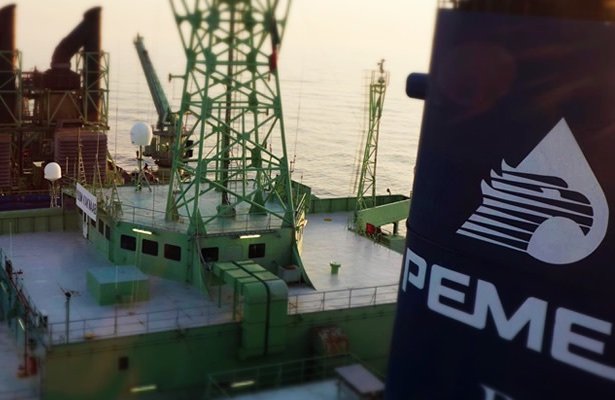
PEMEX is advancing exploratory dialogues with BP and Eni to tap deepwater reserves in the Gulf of Mexico. Amid financial restructuring, regulatory streamlining, and mixed development models, industry stakeholders are prioritizing advanced drilling technologies and capital discipline to reverse production declines and ensure long-term energy security.
Oil company PEMEX is actively engaging in ongoing exploratory dialogues with international energy majors BP and Eni to forge strategic alliances focused on deepwater exploration in the Gulf of Mexico, marking a decisive push to reverse ongoing production declines and stabilize long-term output. Speaking before Mexico’s Chamber of Deputies, Juan Carlos Carpio, CEO, PEMEX, emphasized that a significant share of the nation’s prospective hydrocarbon reserves lies trapped in deepwater marine strata, necessitating technical cooperation with global operators possessing proven offshore expertise. This strategic outreach arrives as state planners work to harmonize ambitious national production targets with stringent capital discipline, shifting the sector’s focus from high-level policy debates toward tactical execution and asset optimization.
The newly disclosed discussions position Eni—currently Mexico’s largest private oil producer, pumping approximately 96,000 barrels of oil equivalent per day (boed) across four southeastern offshore platforms—alongside retail and upstream heavyweight BP as key partners in sustaining Mexico’s baseline production goals. With domestic liquid hydrocarbon volumes hovering below peak thresholds, unlocking deepwater potential is viewed as a vital counterweight to the natural base decline of mature shallow-water complexes. These high-stakes dialogues reinforce a broader industry pivot toward international collaboration in the Gulf of Mexico’s complex prospective basins.

While upstream operators explore new joint ventures, corporate balance sheet metrics continue to dictate operational tempo across the supply chain. Recent financial disclosures indicate that PEMEX narrowed its third-quarter net loss to MX$10.8 billion, though long-term financial debt remains formidable at approximately US$77.6 billion, distinct from short-term trade obligations owed to industrial suppliers which have reached US$23.2 billion and created persistent cash flow bottlenecks across regional service corridors from Tampico to Campeche. To alleviate administrative friction and support capital reallocation, upstream stakeholders have welcomed recent regulatory decrees. Administrative streamlining by the National Agency for Industrial Safety and Environmental Protection of the Hydrocarbons Sector (ASEA) has eliminated redundant reporting burdens, enabling engineering teams to redirect critical resources toward well interventions and enhanced drilling efficiency.
Navigating Mexico’s evolving energy sovereignty framework requires reconciling public production mandates with viable investment structures. State guidelines have increasingly turned toward mixed development contracts designed to inject private capital into assigned assets while preserving state oversight. However, early bidding cycles have demonstrated structural friction, with limited initial private proposal submissions indicating that market participants remain cautious regarding contractual terms and operational execution timelines. Capital allocation has correspondingly concentrated on high-impact offshore milestones—such as Woodside Energy’s ultra-deepwater Trion project and the multi-partner Zama field development involving a consortium comprising Harbour Energy (following the Wintershall Dea portfolio integration), Talos Energy, Grupo Carso, and PEMEX—where operators apply advanced subsea architectural designs to mitigate cost inflation.
Beyond financial restructuring and partnership negotiations, upstream engineering units face severe geological complexities across both mature brownfields and frontier deepwater plays. Industry analysts emphasize that technological deployment must move beyond mere speed optimization to focus squarely on risk mitigation. Advanced drilling technologies like Managed Pressure Drilling do not eliminate geological uncertainty; rather, they transform unpredictable reservoir pressures into manageable variables that significantly lower the probability of operational failure. By integrating real-time data analytics and modern secondary recovery systems, operators can effectively flatten natural decline rates in aging assets.
The convergence of exploratory deepwater talks with BP and Eni, ongoing regulatory rationalization, and targeted capital discipline signals a pragmatic transition phase. Success moving forward will depend heavily on an organization’s ability to bridge administrative bottlenecks, execute transparent public-private partnerships, and leverage advanced technical solutions to de-risk complex extraction environments. As state energy planners and private operators align their strategic roadmaps toward 2030, disciplined execution and collaborative innovation will remain the definitive drivers of economic resilience and energy security in Mexico.
“When you share your news through GEN, you’re not just getting coverage – you’re getting endorsed by the energy sector’s most trusted voice.”