As the global community continues its pursuit of net-zero carbon objectives, renewable energy technologies such as solar and wind power are redefining the modern energy landscape. However, one critical challenge persists, the intermittent nature of these energy sources. To address this, industries and researchers are developing increasingly efficient and sustainable energy storage methods. Among the most promising of these innovations is Concrete-Based Thermal Energy Storage (CTES), a technology with the potential to transform how thermal energy from the sun is captured, stored, and utilised across both power generation and the built environment.
What Is CTES and Why It Matters
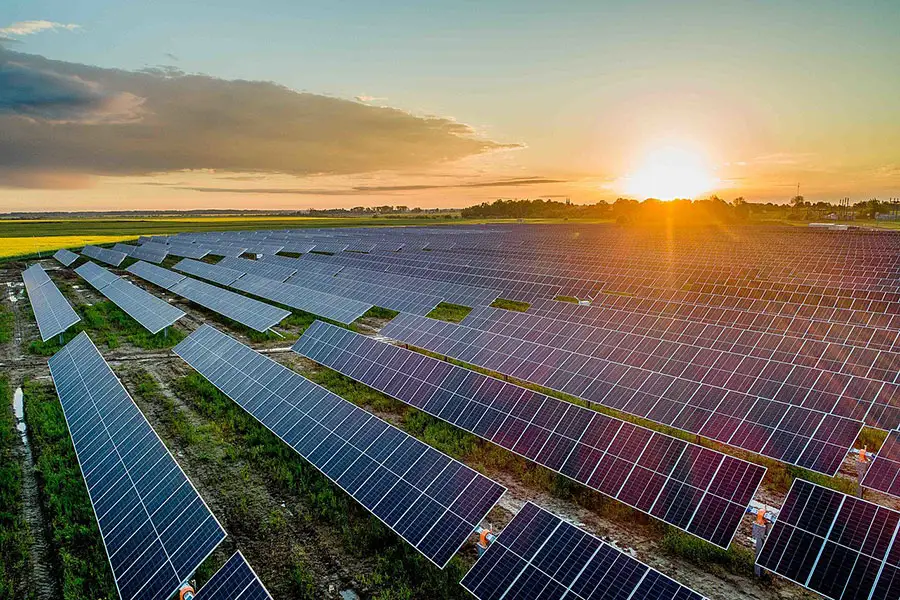
CTES utilises concrete, a material renowned for its strength, affordability, and widespread availability, as a medium for storing thermal energy. When integrated with Concentrated Solar Power (CSP) plants, this system can absorb, retain, and release heat for power generation long after sunset. In CSP plants, mirrors concentrate sunlight onto a receiver, heating a working fluid such as air or molten salt. This heat is transferred to a medium like concrete, which stores it for later conversion into electricity, delivering continuous renewable power even during the night or cloudy periods.
Conventional energy storage materials, such as molten salts and rocks, have several drawbacks. Molten salts are efficient but expensive, prone to corrosion, and can solidify at high temperatures, while rocks often experience uneven heat distribution. Concrete offers a more practical alternative. It is non-flammable, easy to shape into modular units, and operates under normal atmospheric pressure. With production costs of around £25–£30 per kilowatt-hour, CTES is among the most cost-effective thermal energy storage systems.
The Science Behind the Storage
CTES is a form of sensible heat storage, which stores energy by raising the temperature of a solid medium. As the concrete heats, it retains thermal energy within its mass that can later be released through heat exchangers to drive turbines or warm buildings.
While concrete performs well at moderate to high temperatures (up to around 400°C), traditional formulations can crack or lose structural strength under repeated heating cycles. Researchers are now developing advanced mixtures using geopolymer concretes and high-alumina binders that improve durability under extreme conditions. Geopolymer concretes made from industrial by-products such as fly ash or slag have shown significant improvements, offering up to 3.5 times the heat storage capacity of conventional concrete.
Enhancing Heat Retention with Smart Additives
Scientists are improving the heat-transfer properties of CTES by adding conductive additives. Materials such as graphene, carbon nanotubes, and metal powders, such as copper or iron, create microscopic pathways within the concrete, allowing heat to move more efficiently. These additives can increase thermal conductivity by more than 100 per cent, supporting faster charging and discharging cycles.
Ceramic materials such as silicon carbide and alumina have also proved effective, increasing conductivity several times while resisting high temperatures. Metallic fibres, particularly steel and copper, further enhance both heat distribution and structural integrity, reducing cracking under thermal stress.
Another area of interest involves Phase Change Materials (PCMs), which absorb and release heat as they melt and solidify. These materials improve the energy density of concrete-based storage systems. Organic PCMs such as paraffin are ideal for lower temperatures, while inorganic salts like sodium nitrate are more suitable for higher temperature applications. Microencapsulating PCMs prevents leakage and improves long-term performance, making them ideal for hybrid energy storage designs.
Applications from Buildings to Solar Power Plants
The adaptability of CTES enables its use across diverse applications. In the built environment, concrete floors, walls, and foundations can serve as thermal batteries, storing heat during the day and releasing it at night to reduce heating and cooling demands. Projects across Europe are already exploring energy piles and foundation systems that combine structural function with low-temperature energy storage.
On a larger scale, commercial and industrial operations are integrating CTES into CSP plants. In countries such as Germany, Spain, and the United Arab Emirates, modular concrete systems are being tested to extend electricity generation beyond daylight hours. In a 50-megawatt CSP facility, concrete storage systems can provide several hours of additional power after sunset, effectively reducing reliance on fossil-fuel backup systems.
Challenges and Opportunities
Although promising, CTES does face technical hurdles. One of the most persistent issues is the difference in thermal expansion between steel pipes and concrete, which can lead to cracking or loss of thermal contact. Researchers are addressing this by developing materials whose expansion properties more closely match those of steel, or by designing pipe-free systems in which the fluid flows directly through the concrete.
Another challenge involves preventing heat loss over time. Even small imperfections or microcracks can reduce performance, especially in large installations. Advances in insulation and the use of conductive fillers are helping mitigate these losses.
From an environmental perspective, replacing traditional cement with low-carbon alternatives such as alkali-activated materials or industrial by-products can significantly reduce emissions. Life cycle studies indicate that swapping molten salt systems for CTES can cut overall environmental impacts by around 7% per kilowatt-hour of electricity produced.
Looking Ahead
Concrete-based thermal energy storage represents a practical, scalable, and sustainable solution for stabilising renewable energy systems. By drawing on readily available materials and well-understood construction techniques, CTES bridges the gap between laboratory innovation and real-world application. As advances in materials science and system design continue, this technology could become a vital component of solar infrastructure worldwide.
Far from being a static construction material, concrete is being reimagined as a dynamic, energy-storing substance; one capable of storing the heat of the sun and releasing it when needed most, helping power a cleaner, more reliable future.
Author – Nikki Modare, Assistant Manager – Leyton
“From our platform to LinkedIn’s energy professionals – your announcements reach the entire sector’s network, not just our readers.”