Australia has copped a $140 billion wipe-out this week in the worst week since 2022, as investors mull fears of a prolonged war in the Middle East.
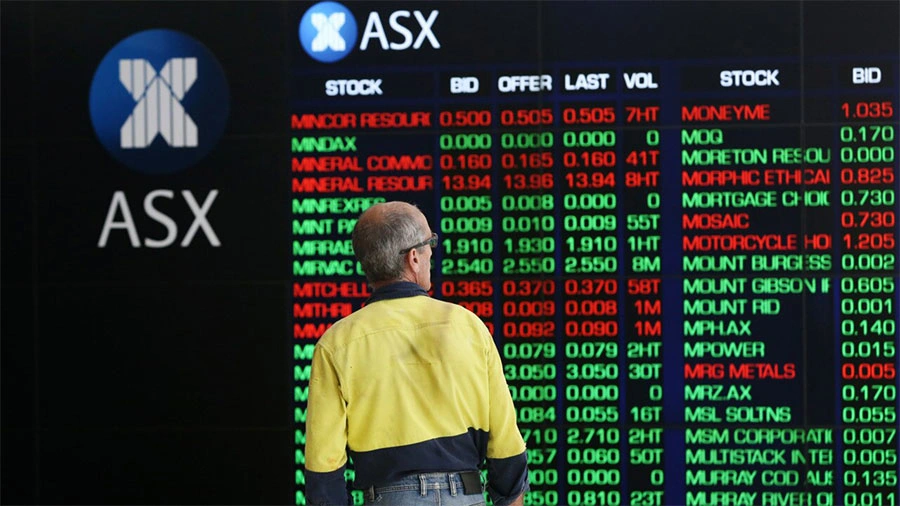
The Australian sharemarket has copped a $140 billion wipe-out in its worst week since 2022, as escalating war in the Middle East prompts a global sell-off.
The ASX 200 was 1.4 per cent down on Friday afternoon with the Iran war entering its sixth day and Brent crude around $84 a barrel, triggering fears of a prolonged conflict.
As of Friday afternoon the market had lost a total of 4.1 per cent this week, or about $140 billion in market capitalisation — a weekly drop not seen since the ASX fell 4.2 per cent afer a surprise rate hike in in May 2022.
AMP Chief Economist Shane Oliver noted the market’s reaction to the war had been “muted” at first, as it managed to close near a record high on Monday before the steep decline.
“Obviously there’s creeping concern that the war in the Middle East will go on for longer,” Mr Oliver told news.com.au.
Mr Oliver pointed out that the market fell a total of 14 per cent from March to April 2025 after Donald Trump’s Liberation Day tariffs, however.
“It’s nowhere near as bad as it could be, but obviously it all depends on the duration of the conflict … You really need to see signs that the blockage in the Strait of Hormuz is coming to an end.”
Iran has declared the Strait of Hormuz closed, holding 20 per cent of the global oil supply hostage after the US and Israel began strikes on the Islamic Republic on February 28, killing Supreme Leader Ali Khamenei.
At least 200 ships, including oil and liquefied natural gas tankers and cargo ships, remain anchored off Gulf countries waiting to pass through. Several have been attacked in the area since the war began.
Donald Trump has announced that the US will provide insurance to tankers and escort them through the strait “if necessary,” but his plan has yet to materialise.
The US treasury performed an about-turn on Thursday local time when it issued a 30-day waiver on Friday allowing India to buy Russian oil.

“To enable oil to keep flowing into the global market, the treasury department is issuing a temporary 30-day waiver to allow Indian refiners to purchase Russian oil,” Treasury Secretary Scott Bessent said in a statement posted to X.
It came after the US had spent months pressuring India not to buy Russian oil, in a bid to prevent money from flowing to Moscow’s war effort in Ukraine.
High petrol prices in the US will put pressure on the president ahead of the November mid-term elections, but Trump claimed on Thursday local time he wasn’t worried about rising gas prices.
“I don’t have any concern about it,” he told Reuters.
“They’ll drop very rapidly when this is over, and if they rise, they rise, but this is far more important than having gasoline prices go up a little bit.”
In Australia, the oil price has also begun flowing through to petrol stations, with motorists spotted stockpiling petrol amid concerns fuel could hit $3 a litre or more.
Higher petrol prices will add to inflation, placing the Reserve Bank of Australia (RBA) in a nightmare position after it already hiked the cash rate to 3.85 per cent last month in answer to above-target inflation numbers.
Gas has also surged since the war began, with JKM, the benchmark price for spot LNG delivered to major Asian economies, hovering at $15.50 on Friday.
That puts pressure on Aussie gas and electricity prices, according to Macrobusiness Chief Economist Leith van Onselen, who has urged the federal government to force a domestic reserve on the East Coast. Unlike Western Australia, Aussie businesses and consumers on the East Coast are forced to pay international gas prices.
Among the hardest-hit Australian companies during Friday’s sell-off were the miners BHP and Rio Tinto, down 5.6 and 5.5 per cent, respectively.
It came after a fresh flare-up in months-long negotiations between China’s state-backed iron ore buyer and BHP, but Mr Oliver believed the Iran war was the main issue hurting miners.
“It’s a reflection of concerns that the ongoing crisis in the Middle East will lead to slower economic growth, and that will weigh on demand for industrial metals,” he said.
The American S&P500 has fared better than the ASX since hostilities opened, falling less than 1 per cent this week, including a 0.6 per cent drop on Thursday local time.
“Join the companies that smart energy professionals follow – because when you’re featured on GEN, the industry pays attention.”