- Brazil aims to become the world’s fourth-largest petroleum producer by the end of the decade, a goal supported by its 2025 membership in OPEC+ and access to strategic development resources.
- The country’s production growth is primarily driven by the prolific offshore pre-salt oil fields, which contain 81% of its proven reserves and attract foreign investment due to low breakeven costs and desirable light, low-sulfur crude.
- Major investment, including Petrobras’s $109 billion 2026 to 2030 business plan, is expected to increase crude oil output to 4.2 million barrels per day by 2028, potentially generating over $42 billion in revenue for Brasilia.
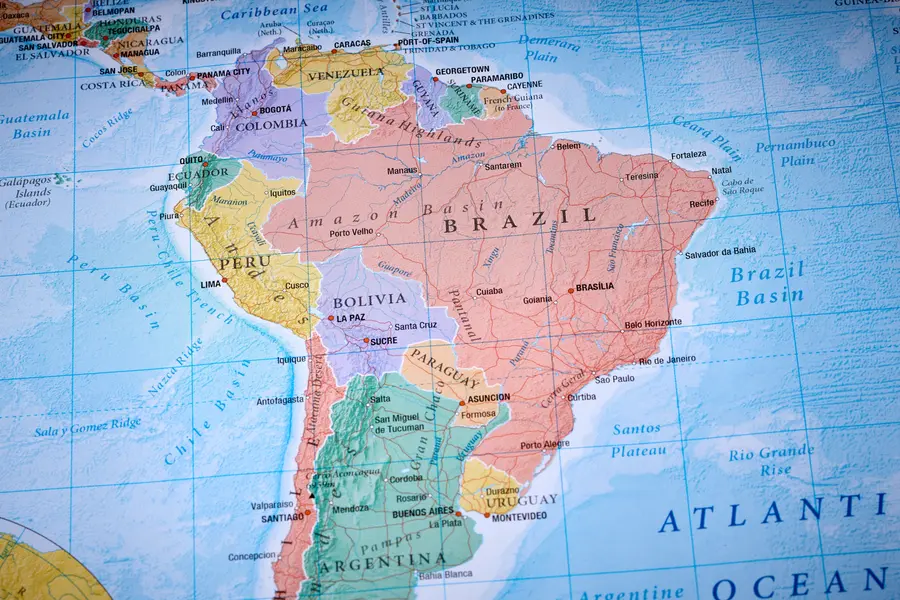
South America’s largest economy, Brazil, is on track to be a top 5 global oil producer. During 2023, Brazil received an offer to join the OPEC+ price cartel, but it took until early 2025 for the government in the capital Brasilia to accept membership. This signaled a significant change in government strategy, with President Luiz Inácio Lula da Silva seeking to make Brazil the world’s fourth-largest petroleum producer by the end of the decade. By joining OPEC+, Brazil can access considerable strategic resources to assist with the development of its offshore oil fields while contributing to price stabilization strategies and not being impacted by production caps.
Over the last two decades, Brazil experienced solid production growth, primarily due to the massive pre-salt oil discoveries made in the Santos and Campos Basins. The first pre-salt discovery was announced by Brazil’s national oil company Petrobras in 2006. This was the Parati discovery in the Santos Basin, which was followed by the massive Tupi, now called Lula, discovery. This light, low-sulfur oil, which contains few contaminants, garnered considerable attention from Big Oil and foreign energy companies. This sparked a flurry of domestic and international investment, which allowed Brazil to emerge as a leading non-OPEC oil producer and exporter.
Government data shows Brazil finished 2024 with proven reserves totaling 16.8 billion barrels, which represents a 6% increase over the 15.9 billion barrels of proven reserves reported a year earlier. Most of Brazil’s proven oil reserves, 81% or 13.7 billion barrels, are contained within the prolific offshore pre-salt fields. Over the last decade, proven reserves expanded by a notable 29%, with considerable further growth ahead as drilling and other upstream activities expand because of rising investment.
While the hydrocarbon regulator, the National Agency of Petroleum, Natural Gas and Biofuels (ANP), has yet to release Brazil’s reserves numbers for 2025, there are indications they grew once again. Petrobras reported a 6% year over year increase in proven reserves for 2025 to 12.1 billion barrels. Those reserves are 84% weighted to crude oil, with the remainder comprised of natural gas. As Brazil’s largest oil producer, responsible for over 70% of all petroleum lifted, this indicates the country’s proven reserves also grew during 2025.

Vast sums are flowing into Brazil’s prolific offshore pre-salt oil fields, which is driving higher hydrocarbon production. January 2026 data shows an average of 3.95 million barrels of crude oil and 6.8 billion cubic feet of natural gas per day were lifted that month. This represents a notable 14.6% and 20% increase, respectively, over a year earlier, illustrating the pace at which production is expanding. Combined monthly hydrocarbon output hit nearly 5.2 billion barrels of oil equivalent per day, a 15% increase over the same period a year earlier. This is, however, lower than the record 5.25 million barrels per day reported for October 2025.
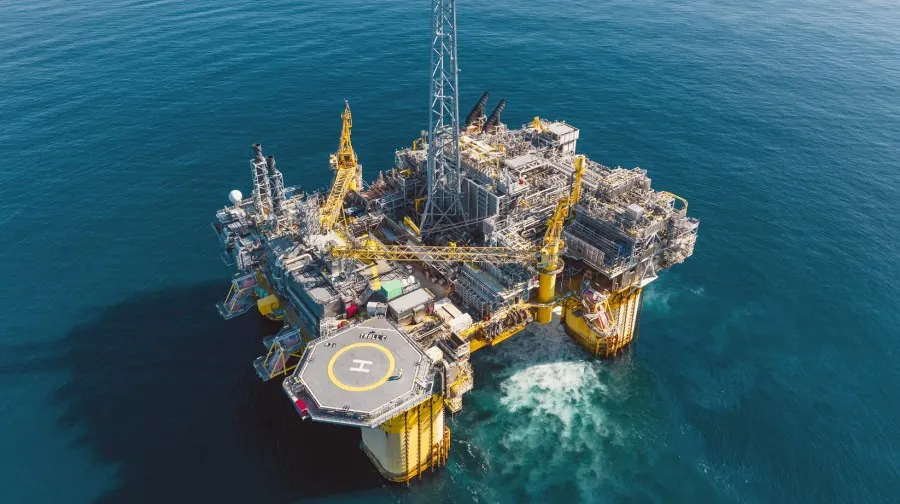
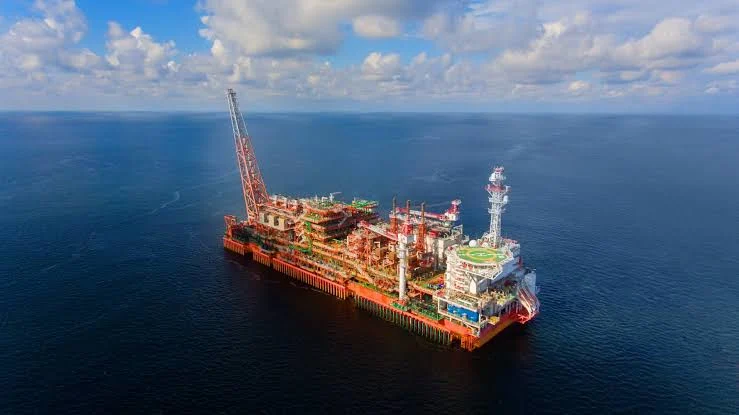
State-controlled Petrobras, which is 37% owned by Brazil’s government, as part of its 2026 to 2030 business plan, will invest $109 billion between now and the end of the decade. Of that total investment, $91 billion is being directed to projects currently being implemented, with $69 million destined for upstream operations, with 62% or $43 billion to be spent on pre-salt facilities. The remaining $18 billion is destined for projects that are currently under evaluation.
It isn’t only Petrobras investing in Brazil’s prolific offshore oilfields; foreign drillers are committing to developing operations. Low breakeven costs, which are estimated to be below $40 per barrel and forecast to fall to as low as $28 per barrel, are attracting considerable interest from international energy companies. The light, sweet, low-emission oil produced further enhances the attractiveness of pre-salt fields for drillers seeking to expand operations. You see, pre-salt crude has an API gravity of around 30 degrees with a 0.3% sulfur content and very few contaminants, like vanadium, which makes it cheap and easy to refine into high quality low emission fuels.
Brazil’s offshore oil industry is one of the lowest carbon emitters globally, further enhancing its attractiveness for foreign energy companies in a world where the fight against global warming is gaining momentum. It is estimated that only around 10 kilograms of carbon is emitted for each barrel lifted from Brazil’s prolific pre-salt oilfields. This is significantly lower than the estimated 88 to 90 kilograms per barrel discharged by Venezuela’s heavy oil production and less than the global average of 18 kilograms of carbon emitted per barrel produced.
As a result, the volume of investment in Brazil’s pre-salt oilfields is expanding at a steady clip. According to the leading industry body, the Brazilian Institute of Oil, Gas and Biofuels (IBP), 2026 investment will hit $21.3 billion, the highest level ever. This, the IBP asserts, will support significant production growth with crude oil output expected to climb to 4.2 million barrels per day, a 6% increase over January 2026, by 2028. Natural gas output is expected to soar by 30% when compared to January 2026, to 8.85 billion cubic feet per day by 2029.
Those numbers equate to a total hydrocarbon output of nearly 6 million barrels daily. This is a notable increase over the 5.2 million barrels of oil equivalent lifted during January 2026. Such solid production growth will potentially see Brazil overtake Canada to become the world’s fourth-largest oil producer, which will deliver a massive economic windfall for Brasilia, which can be used to finance further energy development alongside building infrastructure and other crucial facilities. This will generate considerable revenue estimated to be more than $42 billion for Brasilia, thereby giving South America’s largest economy a massive economic windfall.
“Join the companies that smart energy professionals follow – because when you’re featured on GEN, the industry pays attention.”